
Vietnam’s solar capacity surpasses 19 GW
Figures from the International Renewable Energy Agency state that Vietnam’s cumulative solar capacity reached 19,252 MW by the end of last year, indicating a 586 MW increase in 2025.

BMW targets 2028 hydrogen car launch, cites infrastructure and cost hurdles
BMW Group tells pv magazine its iX5 Hydrogen fuel cell electric vehicle (FCEV) will enter series production in 2028 using a third-generation fuel cell system developed with Toyota, but says hydrogen pump prices must reach parity with diesel for the vehicle to succeed commercially.
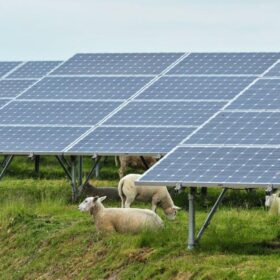
Agrivoltaics maintain or enhanche forage quality, study finds
Researchers have analyzed the biomass and nutritional value of grasses and legumes for grazing dairy cattle, growing in agrivoltaics fields. The results showed that forage quality may be maintained or even enhanced in agrivoltaic environments.
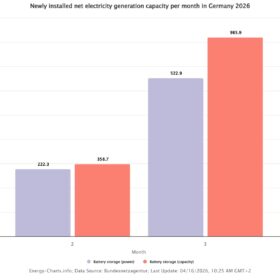
Germany adds record 1 GWh of battery storage in March
Germany could break the gigawatt-hour mark for the first time on a monthly basis. Around 45,000 new residential photovoltaic storage systems have been registered in the market master data register so far in March.

Heat pumps may help boost residential solar in France
The government’s electrification plan, presented last week, includes a goal to double heat pump deployment in France by 2030, potentially benefiting the residential photovoltaic sector.
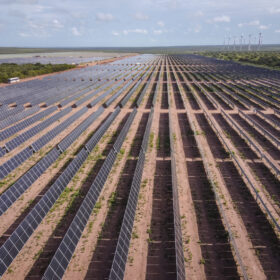
Solar self-generation could outperform PPAs in Brazil, delivering up to 32.9% savings
A study comparing power purchase agreements and solar self-generation in Brazil’s free market finds that direct investment in photovoltaic plants can cut costs by up to 32.9%, with solid returns but higher risk exposure. While regulatory exemptions significantly improve project economics, self-generation remains sensitive to costs, market prices, and policy changes that could affect long-term viability.

The solar support gap: Why do pro-solar citizens reject local projects?
Researchers from the University of Rhode Island explored why citizens who voiced pro-solar sentiments voted against a solar project development in a 2019 municipal referendum. Their analysis found objections over land use greatly outweigh proximity concerns.

Colombia approves guidelines for integrating energy storage into electricity system
From pv magazine Latam The Colombian government has issued Decree 0393, establishing public policy guidelines for the integration of energy storage systems (ESS) into the National Interconnected System (SIN) and Non-Interconnected Zones (ZNI). The decree defines criteria for their deployment, enables participation in electricity markets, and sets the basis for remuneration, in the context of […]
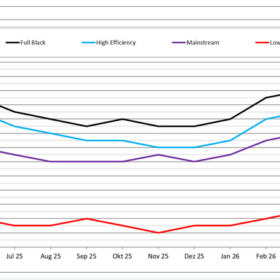
PV module prices continue to rise unabated
Photovoltaic module prices have risen for the fourth consecutive month, driven by strong demand for energy independence despite falling upstream costs such as polysilicon. At the same time, production cuts in China and tighter supply conditions are limiting availability, reinforcing price increases across all technologies.

Philippines registers solar module maker targeting EU export market
The Philippine Economic Zone Authority (PEZA) has formally registered Genuine Renewable Energy and Eco-Friendly Energy Network Corp. (GREEENC) as an ecozone enterprise to manufacture and export PV modules, with the European Union as the primary target market.
