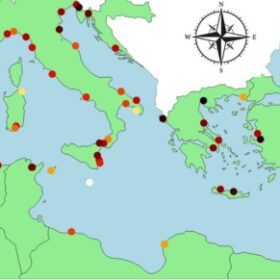
The Hydrogen Stream: Levelized cost of hydrogen at Mediterranean ports can be as low as €2.5/kg for hybrid systems
A study from the University of Naples Federico II finds hydrogen production at Mediterranean ports could cost €5.7–8.6/kg using only renewables and €2.5–13/kg in hybrid systems, with solar emerging as the most reliable resource and wind outperforming it in select locations. Alongside these findings, major industry developments include new hydrogen and e-fuel projects, advanced electrolyser technologies, and EU-backed infrastructure expansion supporting large-scale decarbonization.

‘I approach inclusion from a perspective of fairness and performance’
This week Women in Solar+ Europe gives voice to Carla Vico, CEO of France’s Green Solver. She says building an inclusive culture means valuing people for their work, accountability, and commitment, rather than their gender or background. “I do not believe in positive discrimination; I believe in creating equal opportunities and making merit-based decisions,” she states.
Will we finally buy European PV modules?
In a new monthly column for pv magazine, the Becquerel Institute explains why Europe’s solar manufacturing outlook is shifting from decline to cautious opportunity, driven by rising energy uncertainty and new regulations like the Net-Zero Industry Act that create fragmented, nationally defined markets with partial protection for domestic producers. While demand and policy support are strong, complexity, uneven implementation, and competition risks mean success will depend on how quickly and strategically industry players navigate this narrow window.
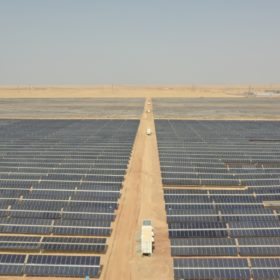
Inside the financing of Egypt’s largest solar‑plus‑storage project
Norwegian developer Scatec ASA has commissioned the first phase of the 1.1 GW Obelisk solar and battery energy storage system (BESS) project in Egypt, backed by $479.1 million in development finance institution (DFI) debt and a fully contracted storage revenue model.

Philippines announces 7th renewables auction
The country’s seventh green energy auction is set to procure rooftop, ground-mounted and floating solar projects across the Philippines, with increased allocation in Mindanao. The Department of Energy plans to release the auction’s terms of reference during the second quarter of this year.

Trina Solar TOPCon patents invalidated in US ruling involving Canadian Solar
The U.S. Patent and Trademark Office has invalidated all claims of two TOPCon solar cell patents previously asserted by Trina Solar against Canadian Solar subsidiaries.

Italy installs 1.43 GW of PV in Q1
The country reached a cumulative installed PV capacity of 44.9 GW at the end of March, according to recent figures from Italian PV association Italia Solar.

Cyber threats for PV: What are supply chain attacks and how do they work
Supply chain attacks compromise PV systems by targeting trusted vendors, software, or hardware components, allowing attackers to infiltrate systems indirectly through legitimate channels. These attacks can disrupt operations, introduce hidden vulnerabilities, and impact multiple assets at once, making vendor security and system validation critical for resilience.

France deploys 1.41 GW of solar in Q1
New figures from grid operator Enedis reveal that France added 1,418 MW of new PV capacity in Q1 2026, roughly matching Q1 2025, despite a broader sector slowdown linked to regulatory changes and delayed tenders.

Hydro-Quebec’s 300 MW solar tender oversubscribed
Canadian utility Hydro-Quebec has revealed the long list of bidders in its 300 MW solar tender. A total 60 bids were submitted with a cumulative capacity of 481 MW.
