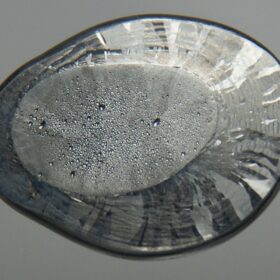
New technique to recover lead in end-of-life solar panels
A research group in the United States has developed a process to recover lead in its metallic form so that it can be reused in the PV industry. The process relies on a leaching solution based on a combination of acetic acid (CH3COOH) and hydrogen peroxide (H2O2), which the researchers said leaches the lead ‘in a matter of minutes.’
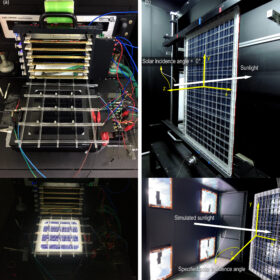
LED media facade for BIPV applications
Scientists in Korea have built a light-emitting diode (LED) facade that can be used in combination with building-integrated PV, with minimal power loss caused by shading. The grid-type LED display can be used as a media façade in buildings making PV power generation more aesthetically appealing.
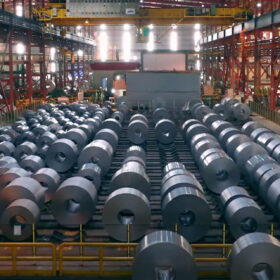
JSW Steel to use green hydrogen to make steel in India
JSW Energy says it plans to set up a green hydrogen plant with an annual capacity of 3,800 tons to supply steel to JSW Steel, driven by 25 MW of renewable energy.
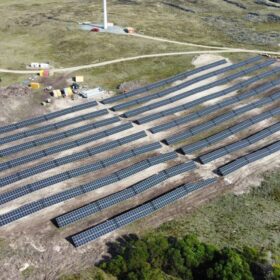
Australian island shifts to renewables with completion of 1.5 MW solar farm
The completion of a new 1.5 MW solar farm has brought Tasmania’s King Island closer to achieving a permanent shift to 100% renewable energy.
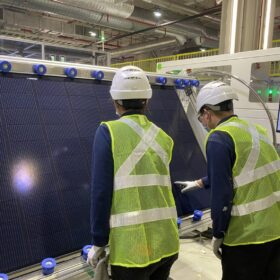
Brookfield, Reliance aim to kick off new era in Australian solar manufacturing
Brookfield’s bold ambitions for Australia have reached a new level, with the global asset manager signing an agreement with India-based Reliance Industries to explore the production of solar panels, long-duration battery storage, and other renewable energy equipment.
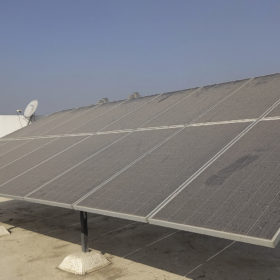
AI-enabled database, simulator for PV soiling losses
Fracsun says it will team up with App Orchid to develop a soiling-loss database and simulation tool.
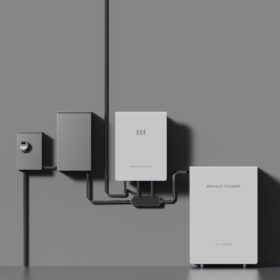
Mango Power introduces 12 kW / 15 kWh whole home battery
The Mango Power M includes a hybrid inverter with 18 kW solar input and can be paired with an electric vehicle charger.
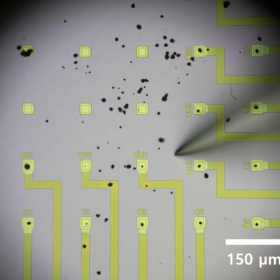
Cracked cathodes not all bad, battery scientists find
Scientists in the United States developed an innovative method to observe the inner workings of lithium-ion batteries and found that cracks which form in the electrode – something manufacturers do their best to minimize – may actually have benefits in allowing for faster charging. The work also challenges assumptions on how certain particles behave inside a battery, with potential consequences for their future design.
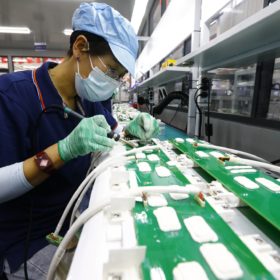
Chinese PV Industry Brief: Sineng expands inverter capacity by 25 GW
Sineng Electric says it will build a new factory in China’s Jiangsu province, while Huasun says it has commissioned 3 GW of bifacial heterojunction cell production capacity in Anhui province.
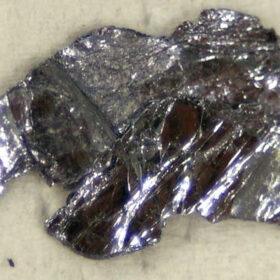
The Hydrogen Stream: Chinese scientists exploring new catalysts for hydrogen
Shanghai University scientists have started researching molybdenum-doped nickel-cobalt phosphide catalysts for hydrogen production, and Indian scientists have devised a method to produce hydrogen from methanol.
