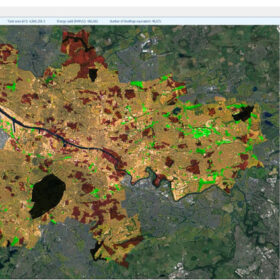
Online mapping tool to identify policy-suitable land for renewables
Called Geospatial Opportunity Mapping (GOMap), the new tool considers high-resolution information from both the local authorities and local utility companies. It is reportedly able to determine the number of rooftop or ground-mounted solar projects that can be deployed in a given area.
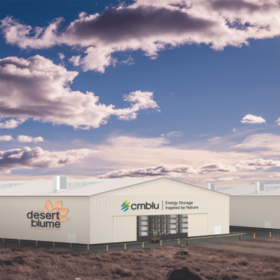
US utility testing 5 MW, 10-hour organic solid flow battery
German battery manufacturer CMBlu is supplying its 5 MW, 10-hour-duration organic solid flow long-duration battery technology to a US utility project, featuring high-performance organic energy storage molecules.
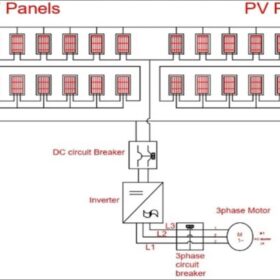
Underground photovoltaic water pumping system with average system efficiency of up to 8.5%
Developed by Egyptian scientists, the PV-powered water pumping system may produce up to 181.8 m3 of water per day. The system consists of two PV arrays with each a capacity of 4.6 kW and a pumping unit made up of a 7.5 kW three-phase alternating current motor, a multistage submersible pump, a deep well, and a 15 kW inverter.
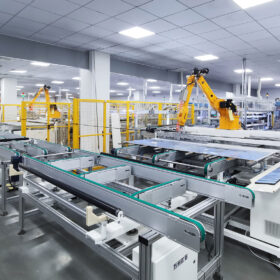
Leapton Energy increases PV module capacity in China to 3.5 GW
Leapton Energy, an 11-year old integrated PV module and battery technology company, is expanding capacity at its factory in China to reach 3.5 GW.
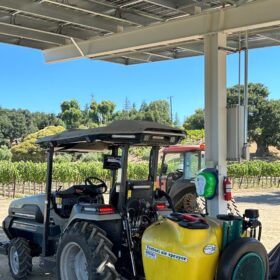
Off-grid solar canopy charges electric tractor at California winery
Paired Power partnered with Monarch Power to deliver the emissions-free off-grid solution. The winery’s solar canopy is a 38.5 kW array comprised of 72 panels, 535 W each.

The Hydrogen Stream: Gulf nations moving forward with tech cooperation
Acwa Power and Eni have signed a hydrogen development deal, while AFC Energy has signed an agreement with Tamgo to sell hydrogen generators.
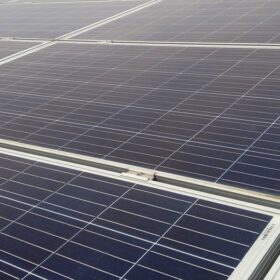
Chinese PV Industry Brief: JinkoSolar wins CHN Energy’s 2 GW module tender
JinkoSolar has agreed to sell more than 2 GW of its solar panels to CHN Energy at prices ranging from CNY 1.225 ($0.17)/W to CNY 1.230/W.
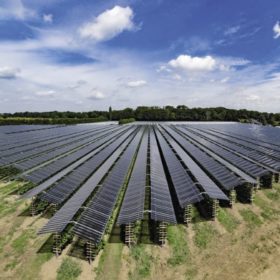
Italian Council of State clarifies rules for agrivoltaics
The Italian Council of State has issued new rules to address a number of regulatory gaps, according to lawyer Andrea Sticchi Damiani, who recently won two cases related to agrivoltaic projects. In both instances, the council confirmed that agrivoltaic facilities are distinct from conventional ground-mounted PV plants.
What can Western utilities learn from emerging-market peers?
While electric companies in the Global North wrestle with how to keep the lights on as ever bigger solar and wind park capacities come online, developing-world utilities are experimenting with new ways of working and transforming the relationship between themselves and millions of new customers.
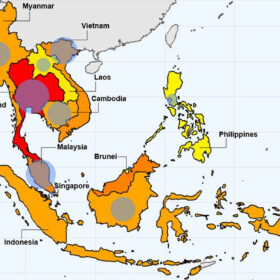
Southeast Asia has technical potential to deploy over 1 TW of floating PV
A group of researchers from the US National Renewable Energy Laboratory assessed the potential for floating PV (FPV) plants at reservoirs and natural waterbodies in 10 Southeast Asian countries. It found that the overall FPV technical potential for the region ranges from 477 GW to 1,046 GW.
