
Germany’s largest agrivoltaic project goes online
Vattenfall has commissioned a 76 MW agrivoltaic plant in Germany under a long-term power purchase agreement (PPA) with a subsidiary of Deutsche Telekom AG.

Powering ferries with floating PV, hydrogen
Scientists in Malaysia have conducted a techno-economic-environmental study of a green fueling system for a ferry that runs between islands in their home country. Using 40,000 solar panels, they were able to power two round trips round-trips per day. Annual CO₂ reduction was measured at 23.75 million kg.

Canadian startup launches residential heat pump with 24/7 monitoring
Jetson said its new heat pump system has a coefficient of performance of up to 4.1 and an energy efficiency rating of up to 11.7. The new product integrates air quality sensors, an energy monitor, and a “smart” thermostat.
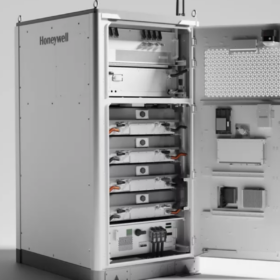
Honeywell introduces all-in-one, modular BESS for C&I segment
Honeywell has launched its Ionic battery energy storage system (BESS) with integrated controls and energy management. The system is designed to cut energy costs, stabilize the grid, and provide backup power.

Vehicle integrated PV potential measured over a million km in Netherlands, Germany
Researchers have collected data from solar sensor-equipped vehicles, racking up over a million km mainly in the Benelux and German region, to be able to make more accurate efficiency and yield predictions. The research project is part of an ongoing three-year European assessment of VIPV.
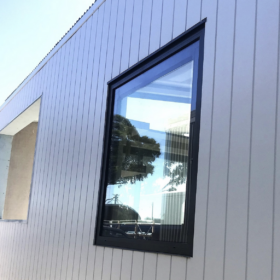
ClearVue unveils Gen3 solar glass with 66% higher energy output
ClearVue Technology says the latest iteration of its solar vision glass delivers more than 66% additional energy output per square metre than its predecessor, while significantly reducing production complexity and costs.
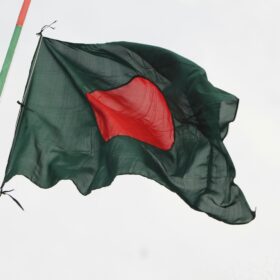
Bangladesh revises net metering rules to expand solar
Bangladesh has updated its net metering framework for solar. The new rules aim to expand access and raise self-consumption among prosumers.
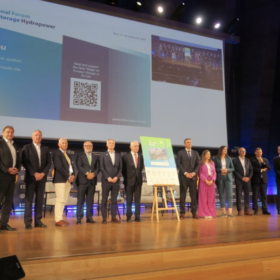
New alliance aims to unlock 35 GW of pumped hydro storage across Europe
More than 50 utilities, hydropower suppliers and energy focused associations have already backed the initiative committing to supprt the rollout of pumped hydro storage in Europe.
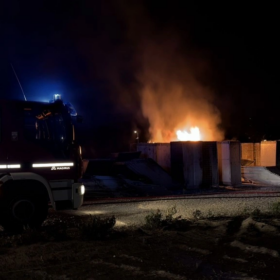
PV system fire under investigation as suspected arson in Italy
A solar plant with about 5,000 panels caught fire earlier this week in Sardinia, Italy. Police are investigating suspected arson.
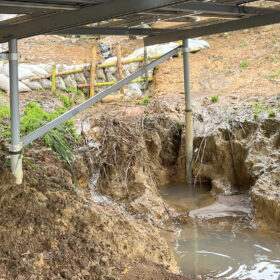
Solar floodplains and fault lines
With the early expiration of key US solar tax credits in 2026 and 2027, solar developers from the United States and Europe are looking to diversify, and the Asia-Pacific (APAC) region represents attractive prospects for many. But unpredictable site conditions can defy even the most experienced developers’ assumptions, causing delays and cost hikes. Upfront due diligence is vital, argue Clean Energy Associates engineers Nicholas Hudson and Evan Woolard.
