
US solar pricing needs a reality check
Sustainable projects depend on prices – and suppliers – that hold up under compliance, delivery and long-term performance requirements.
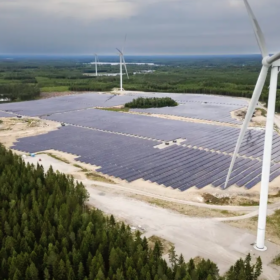
Sweden switches on 89 MW hybrid wind, solar project
The first hybrid power project belonging to Danish renewables developer European Energy is a 39.3 MW solar array tied to a 49.6 MW wind facility in southern Sweden.

KAUST achieves 28.7% efficiency in perovskite-perovskite-silicon tandem solar cell
An international team of researchers led by King Abdullah University of Science and Technology has fabricated a triple junction perovskite-perovskite-silicon tandem solar cell that achieved a world record efficiency for this cell architecture. The device incorporates stabilized perovskites that ensure improved performance and stability.

Australian utility plans 2 GW wind, solar and storage hub
Western Australian government-owned utility Synergy has submitted plans to build a 2 GW hybrid renewable energy hub including up to 500 MW of solar and 500 MW of battery energy storage capacity alongside what would be the biggest wind farm in the state.
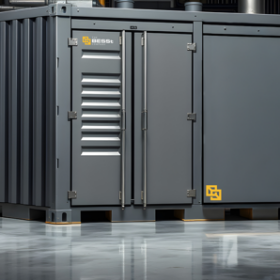
U.S. startup unveils zinc-polyiodid redox flow battery with energy density of 320 Wh/L
BESSt announced that its new redox flow battery technology delivers 20 times the energy density of conventional vanadium flow storage systems. The battery is based on a zinc–polyiodide redox flow chemistry developed by the Pacific Northwest National Laboratory.
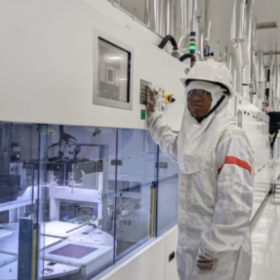
Tata Power’s 4.8 GW cell capacity added to India’s manufacturing list
The Indian Ministry of New and Renewable Energy (MNRE) added Tata Power’s 4,813 MW of solar cell capacity to its Approved List of Models and Manufacturers (ALMM), lifting total ALMM-enlisted capacity to 17,880 MW.

The Hydrogen Stream: Japanese researchers develop green rust catalyst
Japanese researchers have developed a green rust–based catalyst for sodium borohydride, while South Korean scientists have created a framework to assess liquid hydrogen storage tanks for unmanned aerial vehicles (UAV).

Chinese PV Industry Brief: New PV additions for August total only 7.3 GW
China installed 7.36 GW of new solar in August, bringing year-to-date capacity additions to 230.61 GW and total power generation capacity to 3.69 TW.
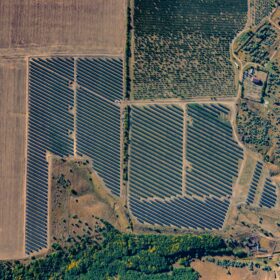
AI platform compiles data on Spain’s renewable energy projects
Orka Energía has unveiled an artificial intelligence platform that compiles and updates data on more than 4,000 renewable energy projects under development in Spain, including capacity, status, substations, and developers.

Namibia approves 3 GW of solar for hydrogen production
The Namibian government has granted an environmental approval for a 3 GW solar farm. The energy generated is set to be used for green hydrogen and green ammonia production.
