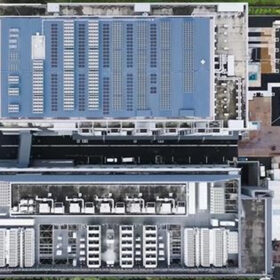
Canon testing solar at Japanese data center
Canon IT Solutions has begun testing a solar PV system to power its Tier 4 data center in Nishitokyo, aiming to boost renewable energy use and reduce costs. The system is expected to generate around 69 MWh annually and enhance power resilience during emergencies.
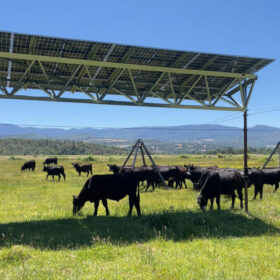
Rute SunTracker opening cattle grazing land to solar power
The company deploys first commercial tracking system with a 13-ft. clearance hardened against wind and beef.
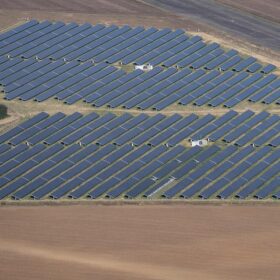
Greek solar producers petition EU over repowering and storage rules
Two complaints to the European Commission allege Greek repowering policies and high performance bonds for battery storage projects block upgrades, raise costs, and hinder energy transition, according to industry association Pospief.

Europe’s first sodium-ion cell made with fully domestic components
Welsh battery breakthrough uses UK-manufactured anode and cathode materials as well as active materials available through local supply chains. Batri plans to scale up material manufacturing and cell building capability.

European solar manufacturers urge Italy to revise heterojunction tax rule
Eleven European solar module makers say Italy’s 2026 tax incentive unfairly favors heterojunction (HJT) technology, risks higher costs and limits competition across the PV market.
Amea Power begins construction on 1 GW/600 MWh solar-plus-storage plant in Egypt
According to the developers, the $700 million giant project will be Africa’s largest single-site hybrid renewable facility. Amea Power began construction before financing was completed.

Saudi Arabia connects 7.8 GWh battery storage project to grid
Saudi Electricity Co. has completed a massive storage project across three sites, enhancing grid stability and renewable integration. Once fully operational, the installation will become the world’s largest battery energy storage system (BESS).
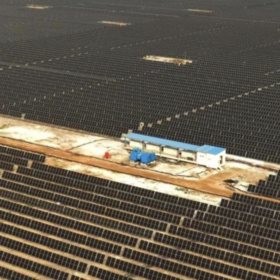
India’s NTPC brings 359.58 MW of solar capacity into operation
NTPC Ltd., India’s largest power producer, says new solar projects in the states of Gujarat and Rajasthan will lift its total commercial capacity to more than 85.5 GW, as it accelerates renewable deployment through subsidiaries.
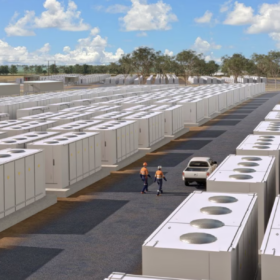
Sembcorp buys Australia’s Alinta Energy for $4.3 billion
Singapore’s Sembcorp Industries has bought Sydney-based energy gentailer Alinta Energy from Hong Kong conglomerate Chow Tai Fook Enterprises in a AUD 6.5 billion ($4.3 billion) transaction.
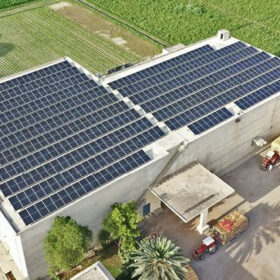
Pakistan unveils new net metering rules for rooftop PV
Pakistan’s National Electric Power Regulatory Authority (NEPRA) has initiated a public consultation on proposed revisions to solar net-metering regulations. A key change under consideration is a reduction in the tariff for surplus solar power, which could be cut by half from PKR 26 ($0.093) per kWh to PKR 13 per kWh.
