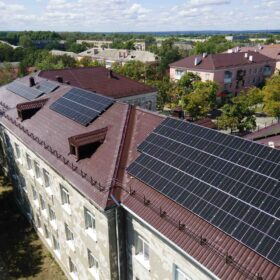
Ukrainian hospital receives solar-plus-storage system
A solar-plus-storage system has been installed at a hospital in northeastern Ukraine in an area frequently impacted by electricity cut-offs due to Russia’s targeting of energy infrastructure. RePower Ukraine says the system offers the hospital reliable power to treat 50,000 patients annually.

US solar faces steep cuts as OBBBA phases out key tax credits
The One Big Beautiful Bill Act (OBBBA) is loaded with negative measures for the US solar industry. What does the bill mean for solar project development over the coming years?
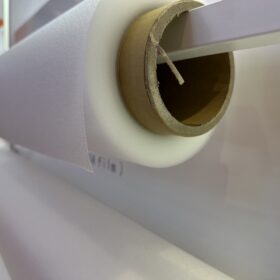
Encapsulant delamination behavior in PV glass recycling
Researchers in Spain investigated effective separation of encapsulants from PV glass with a focus on melting behavior and resistance to the hot knife-method of delamination. The results indicated that thermoplastic polyolefin encapsulants were the easiest to remove from the PV glass.
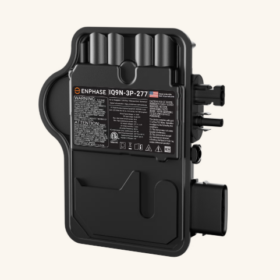
Enphase introduces 97.5%-efficient microinverter based on gallium nitride tech
The inverter is designed for three-phase grid configurations without using external transformers. It contains gallium nitride technology, a first for Enphase’s microinverters.

Philippines switches on agrovoltaic complex with 320 MWh battery storage
The Citicore Solar Batangas 1 Power Plants stand as the Philippines’ first integrated agrovoltaic and battery storage facility.
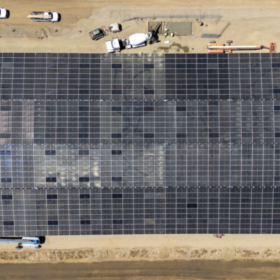
California now hosting canal top solar-plus-storage plant
California has completed the 1.6 MW Nexus canal-top solar pilot, adding a 75 kW iron-flow battery system as part of a $20 million state-funded project to test water and energy benefits.

Malaysian utility plans solar expansion
Sarawak Energy Berhard is working on both expanding its solar capacity and conducting feasibility studies for pumped storage hydropower projects at three locations in the Malaysian state of Sarawak.
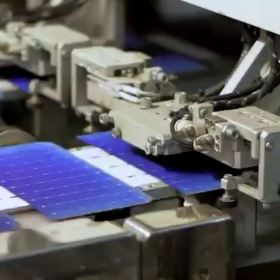
IB Solar plans 4 GW TOPCon cell and module factory in India
IB Solar will build a 4 GW tunnel oxide passivated contact (TOPCon) solar cell and module facility in Uttar Pradesh, India, with an investment of about INR 30 billion ($340.2 million). The project has secured land allocation from the Yamuna Expressway Industrial Development Authority and is scheduled for commissioning by 2027.

Italy’s first Fer X solar auction draws bids for 10.1 GW
Italy’s first solar auction under the transitional Fer X incentive scheme will be finalized in mid-December. Projects over 1 MW will have to be built with modules, cells and inverters that are not manufactured in China.

Philippines updates net-metering rules to ease adoption for 17,000 users
The Philippines Energy Regulatory Commission (ERC) has amended net-metering rules to simplify adoption, allow credit banking and transfer, and make renewable energy certificate meters optional for 17,175 users and 157 MW of installed capacity.
