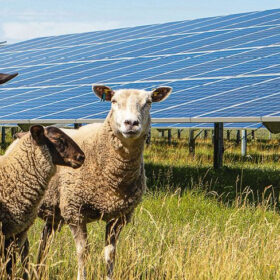
Solar parks reshape soil biodiversity, plant traits
A study of 20 solar parks in southern France found that soil biodiversity and respiration drop significantly under panels, especially in mown areas, while plant traits like height and leaf area can increase under grazing. The researchers highlighted that climate, management type, and solar shading all shape soil and plant responses.
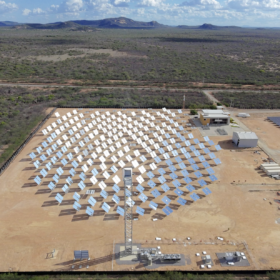
RayGen rolls out 1 MW ‘solar hydro’ power plant in Brazil
Australian solar and thermal energy storage company RayGen says it has achieved a major international milestone with the commissioning of a 1 MW integrated solar electricity and hydro energy storage plant in Brazil.
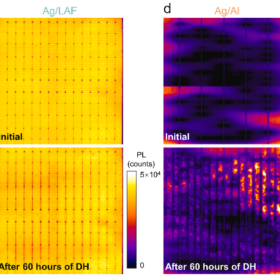
UNSW unveils new ageing method to assess TOPCon solar module degradation
UNSW researchers developed a chemically selective, nitrate-based, single-sided accelerated ageing method for TOPCon solar cells that replicates the mildly acidic environment inside EVA-encapsulated modules. The proposed approach enables rapid, physically meaningful screening of front-side metallisation stability, reliably predicting module-level degradation and reducing development time and costs, according to its creators.

Italy targets 16 GWh storage auction under MACSE scheme
Italy’s energy regulator ARERA has approved a proposal from the Ministry of the Environment and Energy Security to target 16 GWh of storage capacity in the 2029 MACSE auction, while urging caution on final volumes to reflect existing pipeline capacity.
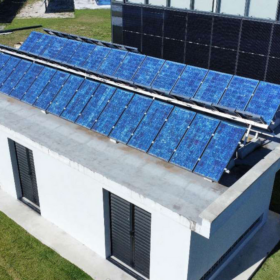
Extensive testing validates reuse of 23-year-old second-life polycrystalline solar modules
Researchers in Brazil tested second-life polycrystalline PV modules for two years and found they retained 87–88% of their original power, with minimal degradation and stable performance. Despite strong sustainability and circular economy benefits, economic incentives remain limited due to the declining cost and short warranties of new state-of-the-art silicon PV modules.

Bhutan opens rooftop, ground-mounted solar tender
Bhutan is seeking expressions of interest from private sector players interested in developing solar projects under a build-own-operate basis. The first deadline to register interest is April 30.
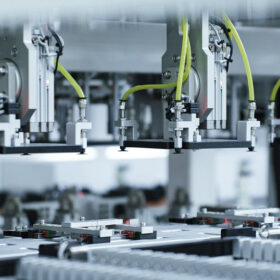
JinkoSolar drops Vietnam solar manufacturing project
JinkoSolar has formally terminated its 4 GW Hai Ha solar cell project in Vietnam, citing US antidumping duties that undermined its export economics. The company will maintain other Vietnamese operations while shifting focus to localized supply chains and Asia-Pacific and Middle East markets.

U.S. national laboratories lead multi-agency push for solar cybersecurity standards
The U.S. Department of Energy is deploying a research framework across four national laboratories to harden the domestic power grid against digital vulnerabilities as solar deployment accelerates.
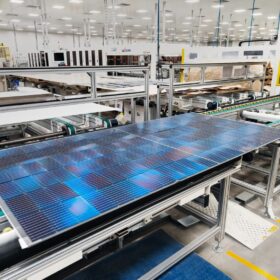
Premier Energies commissions 5.6 GW solar module facility in India
Premier Energies Ltd has commenced trial production at its 5.6 GW solar module manufacturing facility in Seetharampur, Telangana. The new facility produces G12R TOPCon modules with zero busbar (0BB) architecture.

IFC loans $125 million for polysilicon factory in Malaysia
The International Finance Corporation is providing an A Loan to Malaysian polysilicon producer OCI TerraSus that will partly finance the development of a semiconductor-grade polysilicon production facility in Sarawak, Borneo.
