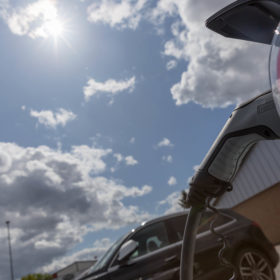
How much money can you make with PV-assisted EV charging stations?
A French-Turkish research team has created an economic model to optimize scheduling for solar-powered EV charging units. The proposed model suggests that such projects might be more profitable today than at the end of the decade, depending on a wide range of variables.
Looking back over lithium
Already responsible for changing the way we communicate and power portable devices, lithium-ion technology is now driving revolutions in both transport and energy supply the world over. A new paper published by Arumugam Manthiram of the University of Texas at Austin examines the technology’s development, from initial discoveries made in the 1970s to the considerations of today’s researchers working on the ‘batteries of the future’.
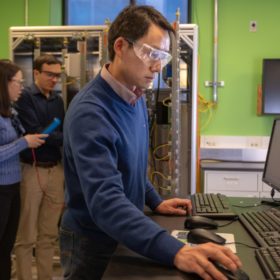
General Electric works on grid-forming inverter controls
The U.S. conglomerate plans to deploy and test new controls with its commercial PV LV5 inverter platform. It aims to develop “grid-forming” controls to allow wind and solar inverters to form voltage and frequency levels like traditional generators. The company wants to improve coordination and synchronization among multiple grid-forming resources, and is working on smart PV reserve controls to improve the transient stability of systems with high renewables penetration.

New Zealand may reach 6 GW of solar by 2050
National utility Transpower said that solar could take a 9.3% share of the country’s generation mix by the middle of the century. However, real growth is only forecast to occur from 2035, with distributed generation expected to account for more than 80% of total installed PV.
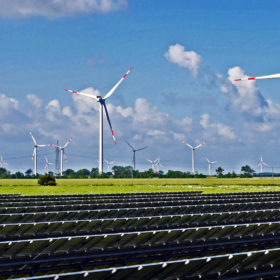
Indian government asks utilities to maintain payments to power producers
The clarification came after states across the country reacted to the power ministry’s recent call for a moratorium on conventional power payments by stopping payments and curtailing renewable power.
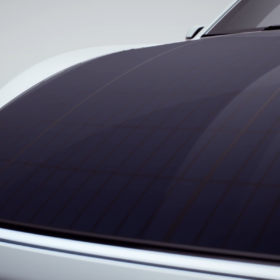
It’s a good idea to charge an EV with solar when we’re socially distanced
Is there any good reason for putting solar on a Tesla Cybertruck? Or is it just virtue signaling? On the other hand, how far are you driving tomorrow? Do you have range anxiety or just general anxiety?

The weekend read: Turkish policy turns to the rooftop
Turkey’s stuttering economy, shifting PV policy landscape, and the fruitless YEKA tenders have undermined the country’s solar progress, even though it was considered Europe’s most promising market as recently as two years ago. But its rooftops could still bloom if new regulations that will be issued in May manage to make solar attractive to both businesses and households alike.
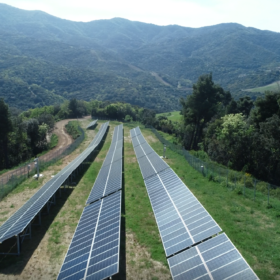
Greece wraps up PV tender with record-breaking €0.04911/kWh tariff
Greece held its last round of renewable energy tenders in Athens on Thursday, resulting in the lowest tariff ever awarded to a renewable energy project in the country.
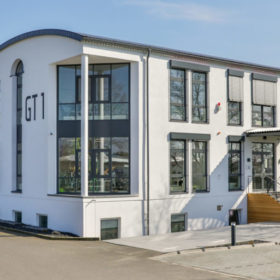
Tesvolt starts commercial storage system production at gigafactory despite Covid-19
The German manufacturer has started to produce its first commercial storage systems at its new plant under strict safety precautions due to the ongoing Covid-19 pandemic. The facility’s current annual capacity is set at 255 MWh, but the company aims to eventually expand that to 1 GWh.
Australian rooftop solar surged to record highs before lockdown
Research by Green Energy Markets shows that the Australian rooftop PV market remained healthy throughout the first three months of 2020. According to STC data, more than 30,000 rooftop installations were registered in the month, for a total of close to 250 MW of capacity. And then came Covid-19.
