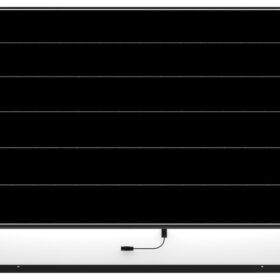
Aiko launches 545 W back-contact solar module with 25% efficiency
The Chinese manufacturer said its new back-contact module delivers up to 545 W and over 25% efficiency in a compact rooftop format for residential, C&I, and off-grid applications.
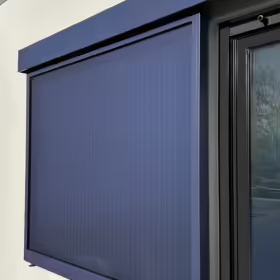
Sliding shutters integrate PV for building facades
German manufacturer Ehret has launched SolarSlide, a sliding shutter with integrated PV modules developed with the Fraunhofer Institute for Solar Energy Systems (Fraunhofer ISE). It provides solar shading while generating electricity for residential and commercial facades.
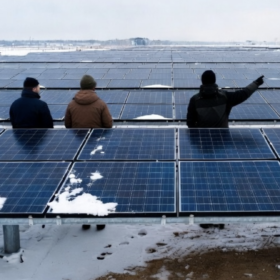
EU solar auctions, corporate PPAs delivered 92 GW in 2022-25 period
Public solar auctions and corporate power purchase agreements (PPAs) supported 92 GW of EU solar capacity from 2022 to 2025, supplying enough electricity for 28 million households. SolarPower Europe says the figures underscore the role of long-term contracts in stabilizing energy prices and strengthening energy security.
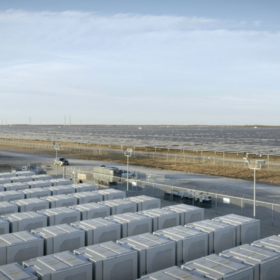
Setting the stage for US energy storage
Sweeping import tariffs and the One Big Beautiful Bill Act (OBBBA) made waves for the US clean energy industry in 2025. While solar developers chase safe-harbor deadlines, US energy storage manufacturing could benefit from rules encouraging onshoring – provided there is policy certainty to bank on
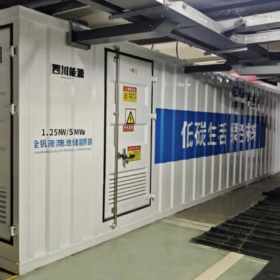
China commissions first urban underground vanadium flow battery system
China has deployed its first 1.25 MW urban vanadium flow battery (VFB), supporting peak AC loads and offering a safer alternative amid tighter lithium-ion storage regulations in dense urban environments.
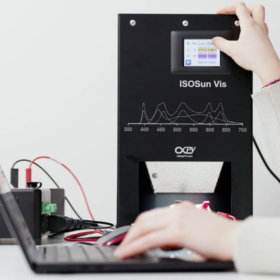
InfinityPV releases new compact solar simulator
The Danish company says its new product is ideal for small to medium-sized solar cell testing. It can simulate light conditions in the 390–700 nm range.
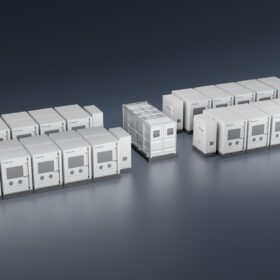
Cubenergy launches FlexCombo 2.0 flexible energy storage block
The FlexCombo 2.0 is an AC Block designed to support the evolving requirements of power systems, including grid stability, regulatory compliance, and scalable project development.
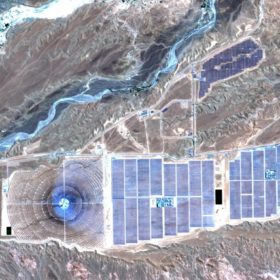
Morocco begins construction on 305 MW Noor Atlas solar program
Morocco’s state energy agency and national utility have signed power purchase agreements (PPAs) and begun construction on six Noor Atlas solar plants totaling 305 MW. The project – financed by KfW, the European Investment Bank and Bank of Africa – aims to expand renewables, support local industry and create regional jobs.

Africa’s next growth frontier: Why agrivoltaics are worth the long-term bet
Africa has abundant sunlight, arable land, and innovative farmers, and agrivoltaics offers a long-term strategy to boost food security, climate resilience, and energy access simultaneously. Success depends on coordinated policy, inclusive community engagement, and patient, innovative finance to build a viable, scalable market.
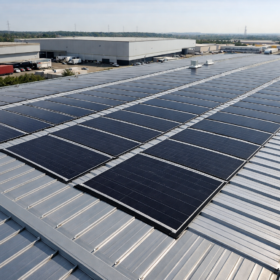
Lightweight PV modules could unlock more than 85 GW of untapped rooftop potential in Europe
In its second monthly column for pv magazine, the Becquerel Institute explains that Europe has vast commercial and industrial rooftops suitable for solar, but decades-old structural limits block conventional PV panels, creating an 85 GW untapped potential. Lightweight PV modules, commercially available and up to 50% lighter, can unlock this constrained market, meeting regulatory, economic, and technical needs for solar deployment across the continent.
