
India installs 6.1 GW of open-access solar in first nine months of 2025
India added 6.1 GW of open-access solar capacity in the first nine months of 2025, a 13% increase from the same period in 2024, according to the Mercom India Solar Open Access Market Report.

Australian rooftop solar install rates reach 2025 high
The latest monthly update from market analyst SunWiz shows 279 MW of new rooftop solar capacity was registered across Australia in November 2025, up 28 MW on the 251 MW that was installed during the previous month.

US government renames National Renewable Energy Laboratory
The US Department of Energy (DoE) has renamed the National Renewable Energy Laboratory (NREL) in Colorado as the National Laboratory of the Rockies, a change it says aligns the institute’s mandate with the Trump administration’s applied energy priorities.

How to use compressed air storage in flooded coal mines
Researchers in China developed a new compressed air energy storage system that uses flooded roadways in abandoned coal mines to store compressed air and heat for nighttime power generation. Simulations show the design can achieve 71.5% thermal efficiency, stable performance, and higher energy density at greater depths, with minimal long-term impact from air leakage.
Canadian Solar consolidates US manufacturing assets
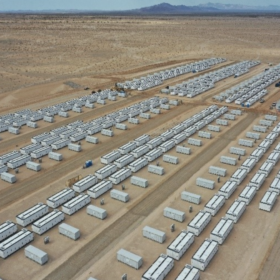
Canadian Solar says it will take direct control of its US solar and battery manufacturing assets through a new joint venture, shifting assets from its China-listed subsidiary and valuing the transaction at about $50 million.
New research shows antimony chalcogenide solar cells are suitable for space use
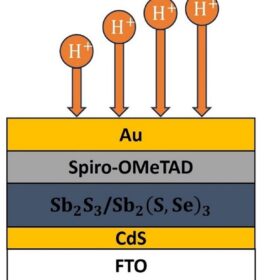
Researchers in the US tested the degradation of antimony chalcogenide solar cells exposed to proton radiation. The result indicated a robust tolerance and potential for use in space.
US battery capacity rises 59% with 14 GW added in 12 months, says EIA
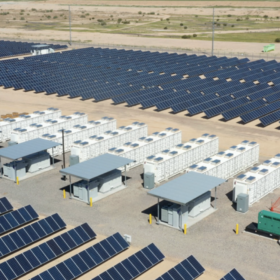
The US Energy Information Administration (EIA) says that battery storage capacity grew by 13,809 MW in the past 12 months and is projected to expand by another 22,053 MW as solar continues to dominate new utility-scale additions.

Italy’s first Fer X solar auction allocates 7.7 GW at average price of €0.05682/kWh
The procurement exercise had initially attracted 1,387 project proposals with a combined capacity of 17,537 MW, according the Italian energy agency GSE.

Panasonic glass-based perovskite solar panels tested in office windows
The Japanese electronics manufacturer is testing its glass-based perovskite solar PV technology in office windows made by YKK AP, a construction and building materials company.
New generation of IPPs is emerging, says Pexapark
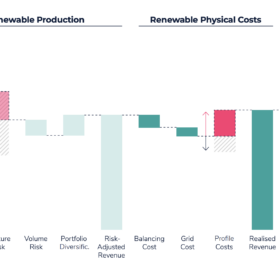
Renewables research firm Pexapark says Europe’s independent power producers (IPPs) are evolving into customer-centric platforms with a focus on adding battery energy storage systems (BESS) to their portfolios and more structuring and pricing capabilities to prepare for the next wave of deals.
