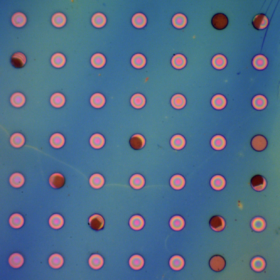
MIT researchers develop polymer film that could prevent solar panel corrosion
Engineers at the Massachusetts Institute of Technology say their polymer coating could be used to protect photovoltaic modules, due to its impermeability to gases. The team has demonstrated that a 60-nanometer-thick film can extend the lifetime of a perovskite crystal by several weeks.

Fraunhofer ISE builds first perovskite-silicon tandem solar cell with copper metallization
Using the mask-and-plate copper metallization technique, scientists at the German research center fabricated a 1.21 cm² perovskite–silicon tandem solar cell featuring a heterojunction bottom device. The cell achieved an efficiency of 19.35%, reportedly the highest value reached to date for this cell type using galvanic front metallization.

US developers hold 33 GW of safe-harbored renewables, says LevelTen
LevelTen Energy says US developers have secured federal tax-credit eligibility for most wind and solar projects planned through 2028, even as long-term pipelines thin under new regulatory pressures.

OPIS Global Polysilicon Marker inches higher as US Section 232 uncertainty lingers
In a new weekly update for pv magazine, OPIS, a Dow Jones company, provides a quick look at the main price trends in the global PV industry.
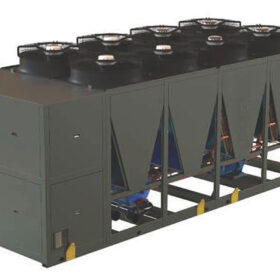
Rinnai unveils air-to-water heat pumps for commercial, industrial use
The systems use propane as the refrigerant and range in capacity from 40 kW to 410 kW. Their coefficient of performance reaches up to 3.88.
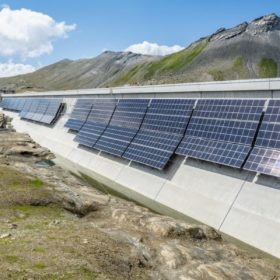
Switzerland forecasts 1.5 GW annual solar growth through 2027
Swissolar’s “Solar Monitor 2025” report projects annual PV additions of about 1.5 GW through 2027 and urges policymakers to sustain steady growth amid policy uncertainty and lower tariffs.

Poland raises permit-free energy storage limit to 30 kWh
Poland’s lower house of parliament, the Sejm, has passed amendments to the Building Law to remove the requirement for building permits to construct energy storage facilities with capacities of up to 30 kWh.
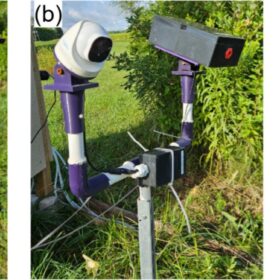
Open-access, modular monitoring platform for multi-year outdoor PV testing
A team of researchers in Canada has developed the Jericho Open Resistive Data Logger—an open-access photovoltaic (PV) monitoring platform that integrates data acquisition and processing hardware, a software framework, and a comprehensive sensor array. Designed primarily for agrivoltaic applications, the system has a total estimated cost of around $2,000.

Colombia sets up state solar panel maker with Swedish state support
Colombia’s Ministry of Mines and Energy says it has created a state-owned solar panel manufacturer with Swedish government backing to supply domestic renewable programs and strengthen local manufacturing.

South Korea mandates solar systems at public parking lots from late November
The South Korean government says all public parking lots larger than 1,000 square meters will be required to install solar power systems from the end of this month, as part of a nationwide policy to accelerate renewable energy adoption in urban areas.
