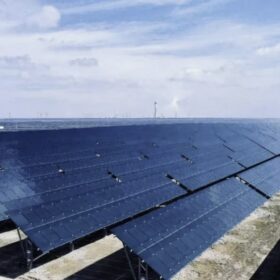
GCL Optoelectronics wins China’s first commercial perovskite-silicon tandem PV module order
GCL Optoelectronics has won a 1.2 MW commercial perovskite/silicon tandem solar module tender held by China’s Huaneng. The procurement required mass-producible, IEC-certified modules with over 25% efficiency, a 25-year performance warranty, and delivery by end of 2026.
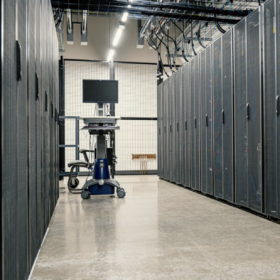
Why battery storage is becoming the engine of AI growth
Data centers are using batteries to run more AI on the same grid connection.

Slovakia deploys 243 MW of solar in 2025
Slovakia’s total solar additions last year fall in line with those seen the prior two years, with cumulative capacity now standing in excess of 1.3 GW.
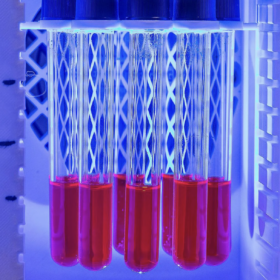
Molecular solar battery stores energy for days, yields hydrogen on demand
Researchers at Ulm University and Friedrich-Schiller-Universität Jena have built a molecular system that captures solar energy in a water-soluble redox copolymer, stores it at more than 80% charging efficiency for several days, and releases it as hydrogen with 72% conversion efficiency whenever required.
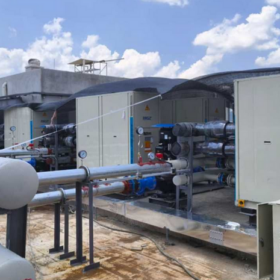
PVT-driven tower heat pump for building retrofits
Researchers in China demonstrated that integrating energy tower heat pumps with evaporator-side boilers, air-source heat pumps, or solar-assisted systems can significantly improve winter heating efficiency and economic performance in commercial buildings. Among the four configurations tested, the evaporator-side boiler and solar-assisted systems delivered the highest performance and energy savings, offering a sustainable, low-carbon alternative to conventional heating.
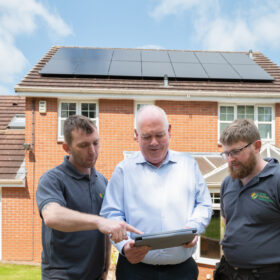
Solar panels and low-carbon heating mandated for new homes in England
Heat pumps and solar PV effectively mandated under new building regulations for England. UK government says it is stepping up push for clean power in response to Iran war. Major UK retailers expected to have first plug-in solar devices on shelves within months.
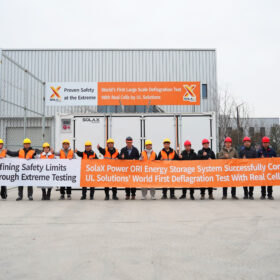
SolaX Power validates system level safety through extreme testing
Under controlled conditions, the SolaX ORI 5 MWh system’s battery cells were intentionally driven into thermal runaway, with the emergency ventilation system kept closed throughout. The system’s pressure relief structure activated as designed to guarantee no additional risks to surrounding personnel or the environment.

Solar cyber threats expand, but inverters still stay in the crosshairs
In an interview with pv magazine, Jay Johnson, the CTO of US-based cybersecurity firm DERSec, explains that PV systems face cybersecurity risks that extend far beyond inverters, as demonstrated by a December attack on Polish solar plants where wiper malware targeted substation equipment rather than the inverters themselves. Vulnerabilities often lie in backhaul communication channels like APIs and mobile apps, making layered defenses, network segmentation, and vigilant monitoring essential to safeguard distributed energy resources.
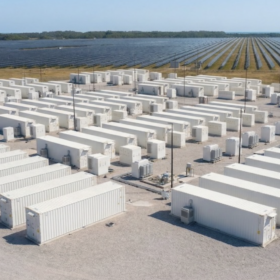
When battery imbalance turns 11% of capacity into stranded energy
A 350 MWh battery storage system in Europe is delivering significantly less energy than expected due to cell imbalance, with the battery management system failing to detect the issue, tradable energy volumes chronically overestimated, and weekly balancing cost exposure reaching up to €110,000 ($127,745). This is one of the real-world failure scenarios to be examined at the Battery Business & Development Forum on April 1.
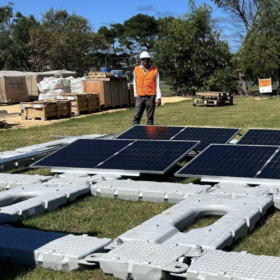
Enervest begins building Australia’s largest floating solar array
Melbourne-based renewables developer Enervest has begun construction of a 500 kW floating solar array on a water storage reservoir in Warrnambool, Victoria, which it says will be Australia’s largest floating solar installation on completion.
