
RenewSys launches reel-format sheet encapsulants for junction box, busbar insulation in solar modules
The Indian PV manufacturer has launched Conserv Augmensheet, a sheet encapsulant for insulation and sealing of busbar and junction box areas in solar modules. Supplied in reel format, the product supports automatic feed-in on fully automated module manufacturing lines, reportedly enabling higher productivity and consistent processing for solar module production.

Solar module efficiency could exceed 35% by 2050
A new Perspectives research study on the future of the global PV supply chain outlines how module prices, performance, and lifetimes could evolve over the next 25 years. The work reflects a collaboration among leading solar research institutions worldwide. One of the study’s authors, the director of the Fraunhofer Institute for Solar Energy Systems (ISE), told pv magazine that solar module and cell efficiencies could exceed 35% by 2050, with panel prices expected to drop by a factor of two.
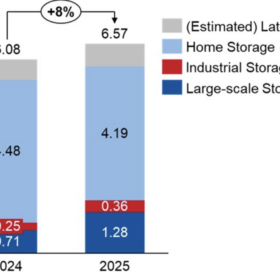
Germany adds 6.57 GWh of battery storage in 2025, total hits 24 GWh
Germany added an estimated 6.57 GWh of stationary battery storage capacity in 2025, an increase of about 8% year on year, lifting total installed capacity to roughly 24 GWh. Growth was driven by industrial and large-scale systems, even as home storage installations declined alongside weaker rooftop solar demand.
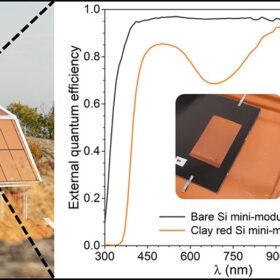
Danish researchers develop color-tunable BIPV foil
The use of a novel roll-to-roll process and optimization technology resulted in polymer foils for use in colored PV modules in a potentially wide range of colors with low iridescence and low levels of efficiency loss.
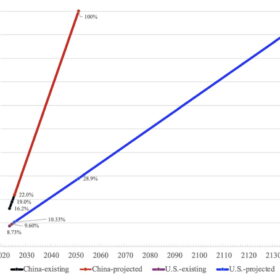
US would reach 100% renewable energy by 2148 at current pace
China is on track to reach a fully renewable energy system by 2051, nearly a century earlier than the United States, according to a global study covering 150 countries.
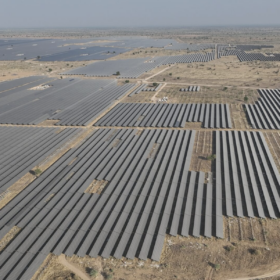
India’s solar capacity additions on track in 2025, says SBICAPS
India added an estimated 40 GW of solar capacity in calendar year 2025, driven by utility-scale projects and rooftop growth. Energy storage tendering also picked up pace.

Voices of leadership: How inclusion is powering innovation forward
This article of the Women in Solar+ Europe series brings together experts and leaders featured throughout 2025 to reflect on why leadership must be redefined for today’s realities. Their insights highlight inclusion not as an add-on, but as the very heart of effective, future-ready leadership.

China to abolish solar export tax rebates in April
China will scrap value-added tax export rebates for PV products from April 1, 2026, while cutting battery rebates ahead of a full phaseout, raising export costs for manufacturers and potentially pulling shipments forward into early 2026.
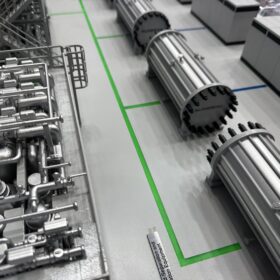
The Hydrogen Stream: RWE commissions 100 MW hydrogen electrolyzer
RWE has started commissioning a 100 MW electrolyzer in Germany to supply renewable hydrogen under long-term contracts, while Hydrogen Utopia International and Hydrogen Systems are advancing plans to build waste-to-hydrogen plants in Saudi Arabia.

Malaysia launches new net metering scheme for rooftop PV
Effective since January 1, 2026, the Solar Accelerated Transition Action Programme (Solar ATAP) aims to build on Malaysia’s previous net metering program’s efforts to maximize the use of rooftops for solar generation by incentivizing consumers to export excess generation to the grid. The capacity limit has been set at 100% of the consumer’s maximum demand, or 1 MW.
