
India adds 25.3 GW of module capacity, 11.6 GW of cells in 2024
Indian manufacturers built 25.3 GW of solar module manufacturing capacity in 2024, taking the nation’s panel capacity to 90.9 GW as of Dec. 31, 2024.

Gerchamp launches energy management system for C&I applications
The Chinese company said its new all-in-one module has a DC input current of up to 70 A and a voltage range of 650 V-900 V.
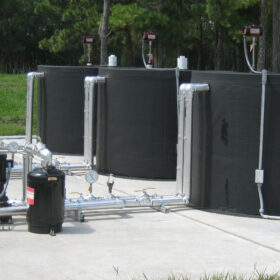
Compression-assisted adsorption thermal battery prototype for seasonal heat storage
Chinese researchers have developed a thermal battery prototype using composite sorbents and have scaled it up via simulation to operate in real world conditions. A compression ratio from 1 to 4 reporteldy boosts average output heat power by 300%.

GoodWe unveils hybrid inverters for large residential applications
GoodWe says its new EHB single-phase hybrid inverters suit larger residential energy storage applications with the series supporting 200% PV oversizing, allowing for systems up to 20 kW in size.

Chinese PV Industry Brief: Solar stocks slide as US tariffs stoke concerns
Chinese solar stocks tumbled on April 7 after the US government announced new tariffs, with more than 120 PV-related shares falling and over 85 dropping more than 10%. Analysts downplayed the impact, citing the US market’s limited role in global solar demand.

How to reconfigure PV modules in degraded solar plants
Indian scientists have developed six different strategies to reconfigure solar modules in degraded PV assets. Their analysis showed which conditions make the reconfiguration of an underperforming solar plant profitable.
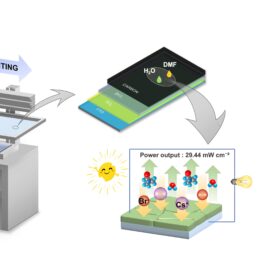
Chinese scientists improve carbon perovskite solar cell performance via dual-solvent process
A team of researchers in China has demonstrated a novel dual-solvent process in 4-terminal carbon CsPbBr3 perovskite solar cells that achieve 10.18% power conversion efficiency. They have also built a large area 17.88 cm2 device achieving an 8.72% efficiency while retaining 93.2% of the initial performance after 1,000 hours of operation at 150 C.

Jindal (India) launches Al-Zn coated steel coils for PV module mounts
Jindal (India) Ltd. has released its Jindalume line of aluminum-zinc (Al-Zn) coated coils designed for solar module mounting structures.
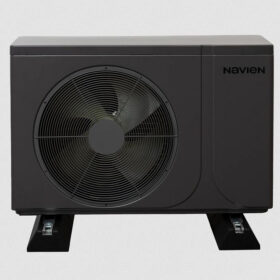
Navien unveils 4-17 kW air-source heat pump for residential applications
The South Korean heating specialist said its new heat pump system can achieve a seasonal coefficient of performance of up to 4.79 and flow temperatures of up to 75 C.
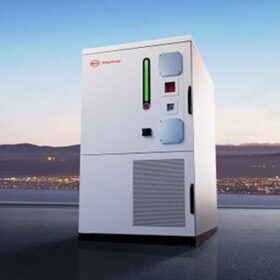
BYD launches new C&I highly integrated battery storage solution
The Chinese manufacturer has unveiled its latest generation commercial and industrial (C&I) energy storage system, Chess Plus. The product is currently available in China and the US, with the European version under evaluation.
