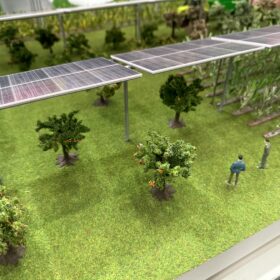
Japan suspends incentives for 342 agrivoltaic facilities
The Japanese authorities have suspended feed-in tariffs (FITs) and premiums for 342 agrivoltaic projects due to violations of new agricultural land regulations. Analyst Makoto Tajima tells pv magazine that this move could hinder the development of agrivoltaics in land-scarce Japan.
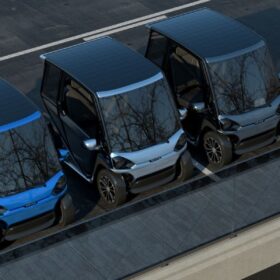
Lightweight mobility with vehicle-integrated photovoltaics
A European consortium of commercial and research groups is developing lighter weight, solar-powered, cost-conscious, three and four-wheel prototype vehicles for passengers and cargo. The $13.4 million project aims for a platform that has standardized components, including the battery, powertrain, and solar PV parts, as well as support for end-of-life, maintenance, and refurbishment.
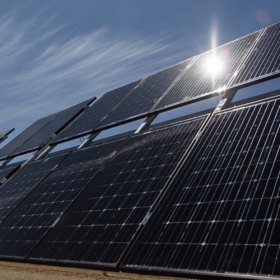
Bondada to build 170.40 MW of solar in India
Bondada Engineering plans to develop 170.40 MW of grid-connected distributed solar plants across the Indian state of Maharashtra.

Indian initiative to commercialize new zinc-ion battery tech
Indian mining company Hindustan Zinc will collaborate with the Bangalore-based Jawaharlal Nehru Centre for Advanced Scientific Research (JNCASR) to develop new zinc alloys for use as anodes in zinc-ion batteries and electrolytes for use in rechargeable batteries.

Nanoparticles, phase-change materials in PVT systems
Scientists have used varying levels of Al₂O₃ and ZnO paraffin wax to improve the electrical and thermal performance of a photovoltaic-thermal (PVT) system. They have also developed a prediction model for this specific combination of hybrid nano-phase change materials.

Evren to invest $5 billion in 3.5 GW of solar, 5.5 GW of wind in India
Evren, a clean energy venture between Axis Energy and Brookfield, has committed $5 billion to develop 3.5 GW of solar and 5.5 GW of wind projects in the Indian state of Andhra Pradesh.
Chinese PV Industry Brief: Nation’s January-July PV capacity hits 123.53 GW
China’s National Energy Administration (NEA) says the country installed 21.05 GW of solar capacity in July 2024, bringing the year’s total to 123.53 GW, while China Huadian Group has launched a 16.03 GW PV module procurement tender.
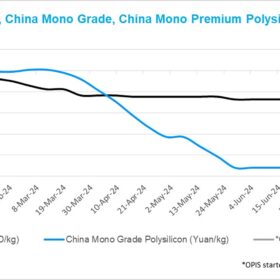
Global polysilicon prices stable amid steady fundamentals
In a new weekly update for pv magazine, OPIS, a Dow Jones company, provides a quick look at the main price trends in the global PV industry.

How much shade is enough?
Researchers have covered part of a rooftop solar plant with a different numbers of shading cloth layers to measure their power, current, and voltage. They have been able to identify a point after which the value of system current and maximum power is no longer sensitive to shading heaviness.
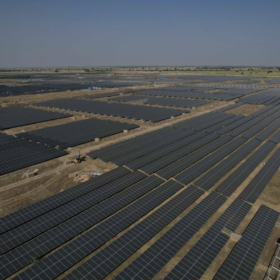
India adds 14.9 GW of solar in H1
India added 14.9 GW of new solar capacity in the six months ending June, breaking all previous half-yearly and annual PV installation records.
