
India secures record-low solar tariff of $0.027/kWh
Solar Energy Corp. of India secured a bid of $0.027/kWh in a recent auction, which is 15% lower than Solarpack’s INR 2.36/kWh winning bid in a previous 2 GW procurement exercise.
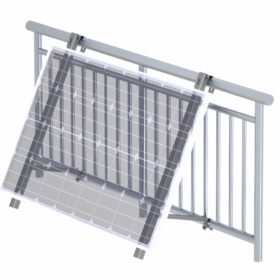
Mounting structure for balcony solar modules
Sino-Australian manufacturer Clenergy has unveiled a new mounting solution for PV panels installed in balconies. The structure is adjustable to different types of commonly-sized balconies with metal railings.
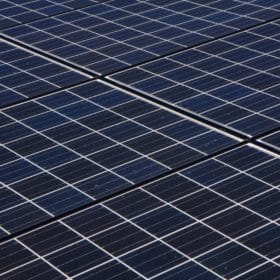
Online algorithm to estimate open-circuit voltage in PV systems
The new technique, proposed by researchers in Pakistan, is claimed to estimate the voltage, current and temperature of a PV system without interrupting the power flow to load.

Carbon nanotubes in search of a solar niche
A group of German scientists has analyzed the possible trajectory of carbon nanotubes (CNTs) in photovoltaic research and industry and has suggested a roadmap to bring this technology closer to mass production. Despite a large number of challenges, the academics predicted a brilliant future for CNTs in PV applications, explaining that the barriers to their adoption are constantly being reduced.
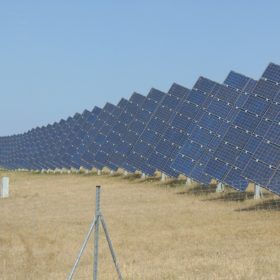
Chinese PV Industry Brief: More glass, module production capacity and a 400 MW solar park
Kibing Group and CECEP have announced plans to increase their PV glass and solar module capacities, respectively. China Energy Investment Corp is planning a 400 MW solar park in the Xinjiang Uygur autonomous region.
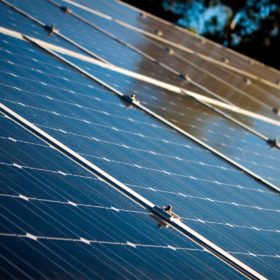
Daqo notes PV glass shortage in otherwise positive update
The polysilicon manufacturer says a lack of the raw material is causing a bottleneck for the industry but CEO has predicted it will be resolved as new production capacity comes online in the months ahead.

Longi releases statement on patent dispute with Hanwha Q-Cells
The Chinese photovoltaic manufacturer said the recent invalidation procedure for its patent at the Chinese Patent Office’s examination and invalidity department is only an administrative examination procedure that only examines whether or not the authorized Chinese patent complies with patent law requirements.

Sri Lanka seeks consultants for $100m solar project
The project will be developed under a credit line facility from the Exim Bank of India.

Trends in solar modules – Interview with RenewSys CEO
Avinash Hiranandani, global chief executive officer and managing director of RenewSys India, speaks to pv magazine about solar module technology trends and the company’s manufacturing focus.
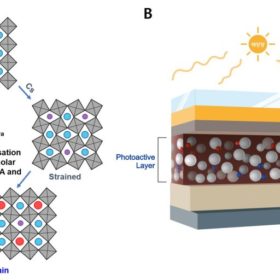
25.17% efficient perovskite solar cell via new photoactive layer
Scientists in South Korea demonstrated a perovskite cell with a certified efficiency of 24.4%. The device is claimed to maintain over 80% of its initial efficiency after 1,300 hours in the dark at 85 degrees Celsius.
