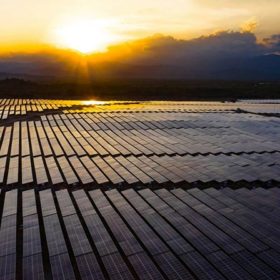
Why the solar M&A landscape in Vietnam is set to heat up
Vietnam has now effectively overtaken Thailand as the largest solar market in Southeast Asia in terms of installed solar operational capacity, with more than 6,314 MW installed up to September 2020. Many hundreds of MWs of solar projects are also still under construction or development. However, its solar (and other renewable energy) M&A activity has developed very slowly to date. There are many reasons to expect that this is about to change, but before we examine them, let us review the main factors behind this sluggish tempo.
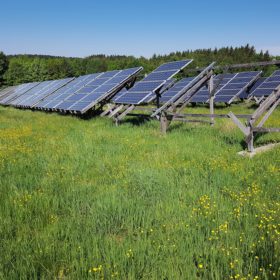
Chinese PV Industry Brief: Jinko announces 2 GW agrivoltaic project in Heilongjiang Province
Meanwhile, Chinese state-owned energy company State Power Investment Corporation (SPIC) has acquired a solar energy developer in Mexico and JA Solar has started construction on the second phase of its 20 GW ingot factory in Yunnan Province.
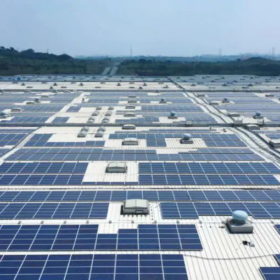
India deployed 400 MW of rooftop PV in Q2
India added 399 MW of new rooftop solar capacity in the second quarter (July-Sept) of fiscal 2020-21. By comparison, just 188 MW was installed in the corresponding period last year.

GCL to generate $304m with 430 MW Chinese project sale
The debt-saddled GCL New Energy solar project business of the polysilicon manufacturer is aiming to sell off solar farms to transform into an ‘asset light’ operation.
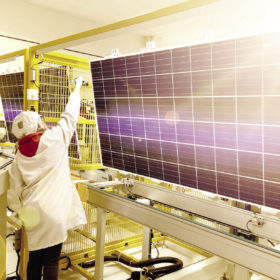
Canadian Solar flags up polysilicon, glass and EVA shortages
The solar manufacturer’s impressive third-quarter gross margin is set to fall back in the current three-month window because global shortages have seen some material costs double since the world came out of Covid-19 shock.
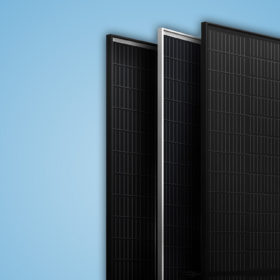
Trina moves to buy 72,000 tons of Tongwei polysilicon for 210mm operation
The Chinese giant plans to further strengthen the supply chain for solar modules based on 210mm wafers by establishing joint ventures with its rival.
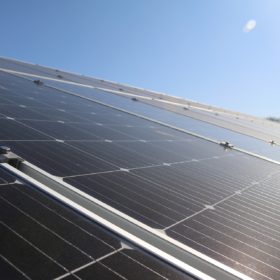
Solar microgrid powers Indian health center
The Indian Institute of Science (IISc) Bangalore has installed a 5.2 kW solar system linked to 150 Ah of lead-acid battery storage in a project supported by the Sunrise program led by Swansea University, in Wales.

Hanwha Q Cells unveils special panels for floating PV
The South Korean module manufacturer has developed two new products for large-scale floating PV plants. They have power outputs of 415 W and 420 W and efficiencies of 19.4% and 19.6%.

Trina Solar signs $321m solar glass order
The Chinese giant has inked a 26-month deal with supplier Changzhou Almaden to purchase 85 million square meters of the material for its ultra high power Vertex products.
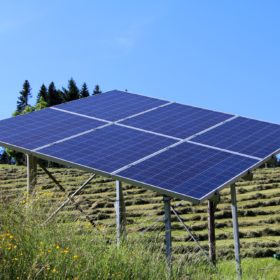
The best renewables combination for off-grid power supply
Scientists in India have proposed a model to design an off-grid, hybrid energy system based on a combination of solar, wind, biomass, biogas and fuel cell, linked to storage, for electrifying a cluster of three village hamlets in the Indian state of Karnataka. The model is implemented through the HOMER software and a genetic algorithm.
