
Slovenia opens €29 million call to fund priority solar, wind projects
Slovenia has opened a €29 million ($33.7 million) call under the European Union’s Modernisation Fund to support priority solar and wind projects, with applications due by Jan. 7, 2026.
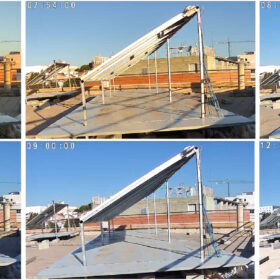
Precise backside irradiance modeling for bifacial PV is often unnecessary
A European research group has developed a new “empirical” method for measuring the backside irradiance of bifacial PV system. The proposed approach was tested across several European locations and it was found to enable annual performance calculations with a fixed backside irradiance share value.

Romania removes double taxation on energy storage
Under the new ‘Order on the Methodological Norms’, electricity charged from the grid and subsequently discharged back onto it is exempt from several key regulated tariffs in Romania.

Poland allocates 1.67 GW of PV in renewables auctions
Figures from Poland’s Energy Regulatory Authority (URE) show that solar accounted for 178 of the 181 successful bids awarded under the country’s latest renewables auctions. Auctions covering hydroelectric power plants, agricultural biogas plants, and biomass went unresolved due to a lack of valid offers.
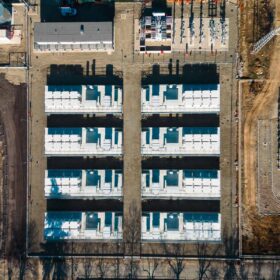
Ukraine’s largest battery storage project enters commissioning phase
Ukraine’s 200 MW/400 MWh battery project dwarfs most Eastern European installations, and is expected to come online in October 2025, ahead of the winter.

Poland added 637 MW of solar during Q1
Poland’s solar capacity neared 22 GW at the end of March, according to figures from the country’s Institute of Renewable Energy. There are currently 532 solar projects with a capacity equalling 950 MW with valid building permits.

Solar curtailment on the rise in Poland
Curtailment of renewable energy in Poland rose 36% in the first five months of 2025, threatening the financial viability of solar plants as operators face long delays and reduced compensation for lost output.

Montenegro sets ceiling price of €65/MWh for first solar auction
Montenegro has set a ceiling price of €65 ($76.11)/MWh for its first solar auction, which will offer 12-year contracts for difference (CfD) for up to 250 MW of capacity. The auction is scheduled to take place later this year.

Financial guarantee unlocks 109 MW for renewables in Moldova
Moldova’s government says developers have returned 30 grid connection permits for renewable energy projects since it introduced a financial guarantee scheme aimed at freeing up network capacity for viable investments.

Researchers identify optimal level of solar, battery storage for European energy market
Researchers in Hungary have developed a model to calculate the optimal PV and battery storage balance to support the European grid in the next few years. They found that the cost-optimal range is at 530–880 GW of PV, combined with battery storage equivalent to 2.5–7.5% of the total intermittent capacity.
