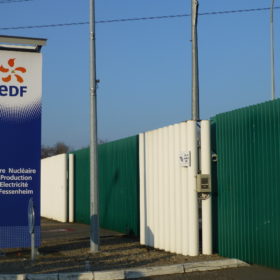
French PV tender at Fessenheim nuclear plant draws €0.065 average price
The first 60 MW slice of the 300 MW procurement exercise attracted 12 winning bids. The French government intends to allocate 200 MW of generation capacity for ground-mounted PV plants no larger than 30 MW each plus 100 MW of rooftop systems.

Voltalia acquires French solar installer Helexia
The French renewables group has taken over a specialist in C&I rooftop solar and launched a share purchase offer to enable its employees to benefit from the growth of the company.

Solaredge launches smart modules with integrated power optimizer in Europe
For its new offer, the Israeli inverter maker is using modules provided by a Tier 1 manufacturer. The products have a 12-year warranty and 25-year performance guarantee.
Northern Ireland grid aims to be ready for 95% renewables
The U.K. province’s grid operator SONI has announced a £500 million plan to prepare the network for an almost fully renewable electricity system within just five years. Despite the U.K. being seemingly paralyzed by Brexit, the network operator says it can already cope with 65% clean energy in the mix.
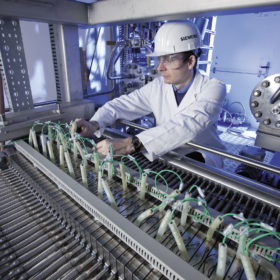
The slow, inexorable rise of green hydrogen
The International Renewable Energy Association says the integration of hydrogen into the energy transition will not happen overnight and electrolysis costs will not be halved until the 2040s. That hydrogen and related products could revolutionize the world energy landscape, however, is not in doubt.
Another 150 MW of solar comes online in Spain
The new generation capacity comes from three 50 MW solar projects Spanish energy company Naturgy secured in an auction by the Spanish government in 2017. The installations are near Ciudad Real, in the central-southern region of Castilla-La Mancha.
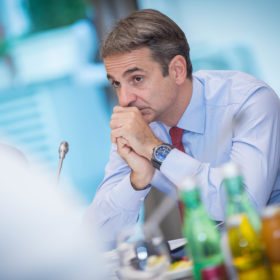
Greece and Hungary pledge to phase out coal
Athens-based policy group The Green Tank labelled Greece’s decision “historic” while Europe Beyond Coal, an alliance of civil society groups working to make Europe coal free by 2030 said Hungary should target a more ambitious 2025 phase-out.
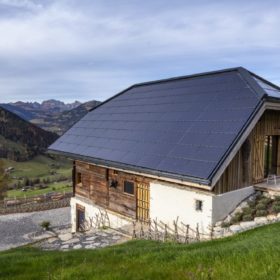
Bigging UP the carbon-free pioneers: Step forward 3S Solar Plus
pv magazine’s UP campaign aims to highlight industry movers who embrace carbon reduction and the circular economy in their operations and Swiss BIPV manufacturer 3S Solar Plus boasts an impressive sustainability record.
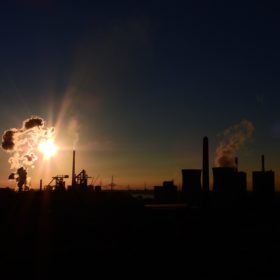
North Macedonian utility embraces solar at expense of coal
State-owned power company Elektrani na Severna Makedonija, which is developing a 10 MW solar project at its coal plant in Oslomej, is planning to stop seeking a coal alternative to its depleted lignite mine and to instead expand the solar scheme to fully replace an ageing 125 MW thermal plant.
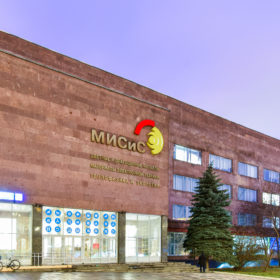
Tuning titanium in perovskite cells
Scientists from Russia’s NUST MISIS institute and the University of Rome have discovered a two dimensional titanium carbide can improve the performance of a halide perovskite solar cell when added in microscopic amounts across the various cell layers.
