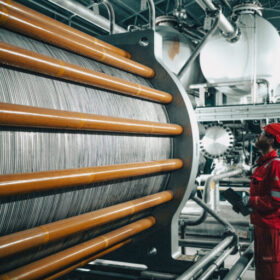
The Hydrogen Stream: ACES 220 MW Utah project nears completion
HydrogenPro says its 220 MW ACES Delta project in Utah is nearing completion, with all electrolyzers operating at full load, while the hub will store hydrogen in salt caverns with energy capacity two to three times that of all US grid-connected batteries combined.
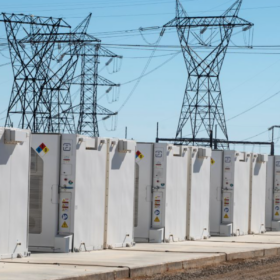
Germany’s battery sector calls for faster grid connections amid backlog
Germany’s large-scale battery industry is urging regulators and grid operators to speed up utility-scale connection approvals as applications outpace available grid capacity.

German startup launches gateway to block inverter kill switches
German startup Solarsecure Tech has introduced a gateway designed to decouple PV inverters from manufacturer clouds and block unauthorized remote control commands.

Fraunhofer IEE calls for ‘grid-forming readiness’ in distribution networks
Germany’s Fraunhofer Institute for Energy Economics and Energy System Technology IEE (Fraunhofer IEE) says in a new position paper that large-scale battery storage systems in medium-voltage grids should be technically prepared for future grid-forming operation, aiming to bridge the gap between current regulations and potential system stability requirements.
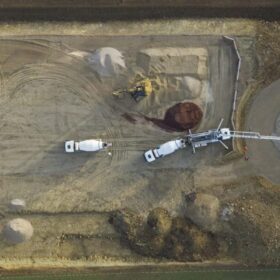
Vattenfall to combine wind and solar with new connection concept
Vattenfall says it will connect a 7.6 MW solar plant to a 17 MW wind farm in Germany, allowing both to operate through a single grid connection point.
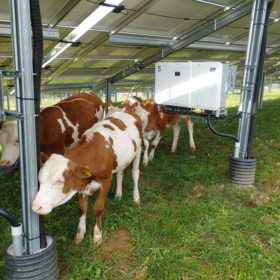
How to protect animals from lightning in agrivoltaics
Researchers in Germany assessed lightning risks in livestock-integrated agrivoltaic systems, identifying key injury mechanisms and establishing safe step and touch voltage limits. Their simulations showed edge strikes and conductive structures pose the highest hazards, highlighting the need for livestock-specific earthing designs and mitigation strategies.

When hail hits PV: New research maps damage, testing, and mitigation
A new review examines the impact of large hail on PV systems, covering damage, testing methods, and mitigation strategies. Researchers highlight risks across Europe and the U.S. and explore ways to improve module resilience.
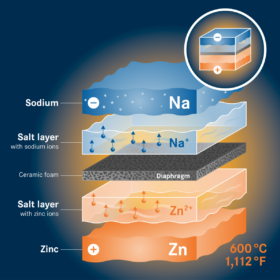
High-temp sodium-zinc batteries reveal causes of rapid capacity loss
Helmholtz-Zentrum Dresden-Rossendorf (HZDR) researchers have used operando X-ray imaging to reveal why sodium-zinc molten-salt batteries, operating at around 600 C and promising for stationary energy storage due to low-cost, abundant materials, experience persistent capacity loss.
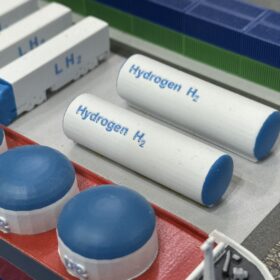
The Hydrogen Stream: Dutch agribusiness installs 1 MW electrolyzer
Dutch tulip nursery Rainbow Colors has completed the installation of a 1 MW solid oxide electrolyzer for on-site hydrogen production, while GlobalData says global low-carbon hydrogen capacity could reach up to 65.3 million tonnes per annum (mtpa) by 2030, driven largely by green hydrogen expansion in the Americas.

German consortium launches web guide for BIPV planning
Germany’s SolarEnvelopeCenter project has launched a web-based planning guide for building-integrated photovoltaics (BIPV), offering standardized design solutions for roofs and facades that comply with building codes and industry standards.
