
‘The technology and the capital are available, but the market simply lacks execution capacity’
1Komma5° has acquired a majority stake in Swedish solar installation provider Cellsolar AB. This is the sixth acquisition of the recently founded Cleantech startup which wants to open the installation sector for the capital market in order to allow rapid growth.
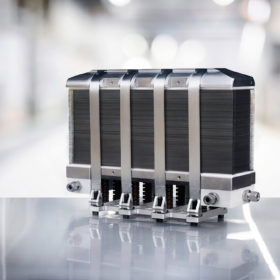
The Hydrogen Stream: Novel fuel cell tech based on liquid-organic hydrogen carrier
Germany’s Schaeffler is developing a hydrogen fuel cell that runs on a liquid organic hydrogen carrier, and Australia’s H2X Global has formed a joint venture with Indian automotive components manufacturer Advik Hi-Tech to manufacture hydrogen fuel cells, generators and vehicles.

Germany deployed 5.26 GW of solar in 2021
The country saw around 421 MW of new PV capacity come online in December alone. Its cumulative solar power reached 56.3 GW.
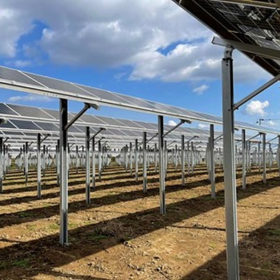
Mounting system for agrivoltaics
Designed by Chinese provider Mibet, the mounting structure can be used for different crop types. The system offers a tilt angle of up to 30 degrees and can host either framed or frameless solar modules.

Germany launches 1.1GW PV tender
The deadline to submit bids is March 1 and the offered capacity is 1,107.7MW instead of the originally planned 617MW. The ceiling price has been set at €0.0557 per kWh.
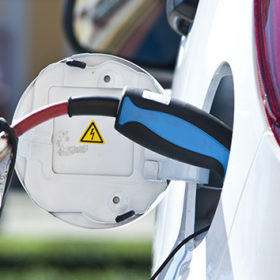
Industry heavyweights look to solid-state battery cells, resources, and recycling
Mercedes-Benz has teamed up with ProLogium to integrate solid-state battery technology into a range of passenger vehicles; Panasonic and Toyota have launched an industrial-academic collaborative research program concerned with battery resources and recycling; and LG Energy Solution plans to spend $2.1 billion with General Motors to build another electric vehicle battery plant in the U.S.
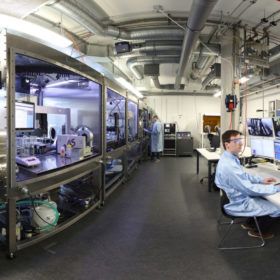
Perovskite solar cell with 1,400-hour stability at high temperatures
German scientists have developed a perovskite PV cell with remarkable stability by adding a bilayer of polymers that protects the perovskite from corrosion. This design helps to shield the extremely sensitive perovskite interface and provides the cell with extraordinarily high conductivity.
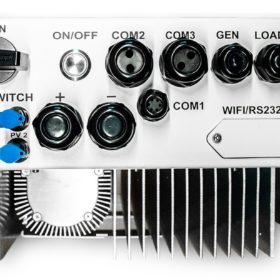
New hybrid inverters for rooftop PV from Germany
The BW-HY3600 and BW-HY4600 inverters can be integrated with existing on-grid or off-grid PV systems and a battery storage system of 48V. Both devices, according to German manufacturer Bosswerk, have AC and DC coupling and are particularly suitable for residential and commercial solar arrays.
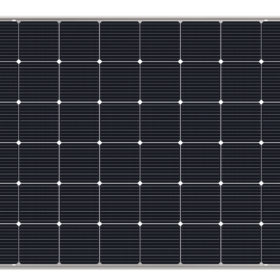
TOPCon vs PERC
TOPCon solar cells are on their way to fully compete with PERC solar products, according to recent research from Germany’s Fraunhofer ISE. Efficiency gains for the TOPCon concept, however, are necessary to help it capture more market share, as production costs remain higher than those for PERC tech. A series of cost-driven strategies to make TOPCon modules advance were outlined in the study.
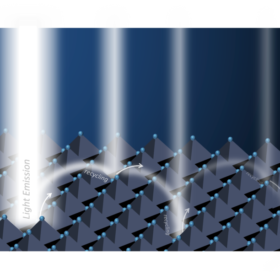
Photon recycling for more efficient perovskite solar cells
Scientists at the Technische Universität Dresden, in Germany, have found that photon recycling and light scattering effects greatly improve light emission in perovskite solar cells, thereby boosting the upper limit for their efficiency to 31.3%.
