
pv magazine Focus: Manufacturers, installers, scientists discuss EMS
Installers, manufacturers, scientists and users at the Smarter E Europe event – held last week in Munich, Germany – discussed PV home storage, energy management systems (EMS), and key challenges in the implementation of Germany’s new solar provisions.
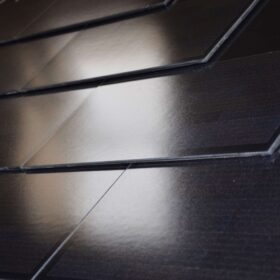
Fraunhofer ISE and Freesuns launch PV roof tile pilot line
The flexible, automated production allows Swiss project partner Freesuns to produce its newly developed matrix shingle roof tiles on a pilot scale before moving into mass production.
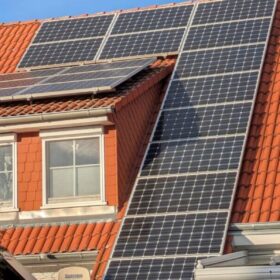
AE Solar and Fraunhofer CSP develop solar module optimized for partial shading
The work is being carried out as part of the “SegmentPV” project, which runs until the end of September. By segmenting the module layout and using integrated bypass diodes, the new module achieves higher yields and a lower risk of hot spots.
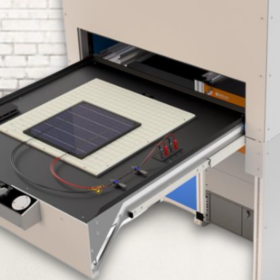
Wavelabs unveils tester for mini perovskite solar modules
The Germany-based testing equipment manufacturer has launched mini-module testing equipment targeted at researchers working on scaling perovskite solar cell technology, thin film devices, and wafer-based PV.
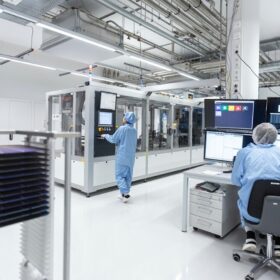
Fraunhofer develops contactless method for measuring back-contact solar cells
Scientists at the Fraunhofer Institute for Solar Energy Systems ISE have developed a contactless method to measure the performance of back-contact solar cells, enabling in-line assessment of key parameters such as efficiency, fill factor, and current-voltage characteristics.
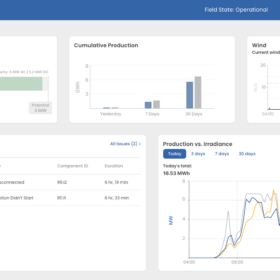
Solargik unveils platform for AI-powered solar tracking, diagnostics, control
Solargik has announced the official debut of its SOma Pro AI-powered platform for solar tracking and system diagnostics. The company says one of its main advantages is the ability to support smarter, faster decision-making.

European markets break records for solar production in April
AleaSoft Energy Forecasting’s latest analysis finds Germany, Portugal and Spain broke their records for solar production on a day in April last week, while Italy recorded its second highest daily figure ever. Meanwhile, weekly average electricity prices increased across most major European markets.
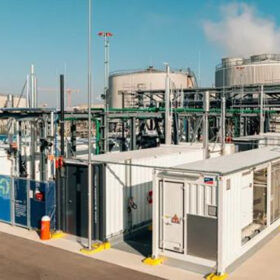
The Hydrogen Stream: OMV starts 10 MW H2 production plant near Vienna
OMV says it has successfully started its 10 MW green hydrogen plant at the Schwechat refinery near Vienna, while Austrian university TU Graz says it has inaugurated a hydrogen electrolysis test center at its Inffeldgasse Campus to develop and test hydrogen technologies.
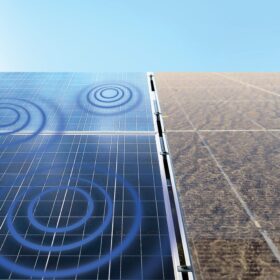
Fraunhofer presents solar module cleaning tech using structure-borne sound
Fraunhofer Institute for Digital Media Technology IDMT has developed a solar module cleaning system that uses structure-borne sound and targeted mechanical vibrations to dislodge dust. Researchers will present the technology at Intersolar Europe in Munich from May 7 to 9.
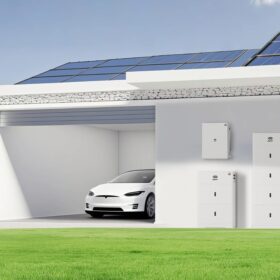
Biwatt releases 4.5 kWh sodium-ion battery
The Chinese manufacturer said its new IP65-rated product has a lifetime of 5,000 cycles. Up to four batteries can be stacked together, with total storage capacity reaching 72 kWh.
