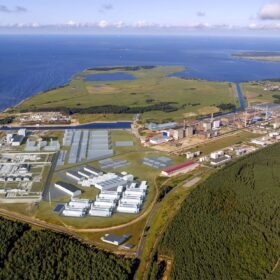
The Hydrogen Stream: KGAL invests in 1 GW green hydrogen hub in Baltic Sea
The KGAL ESPF 6 Energy Transition Fund says it is investing in a 1,050 MW green hydrogen hub at Lubmin, a Baltic Sea port in Germany.
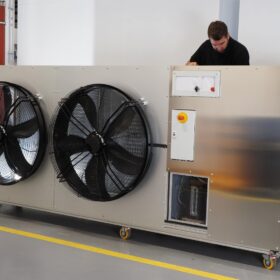
Fraunhofer ISE developing propane heat pumps for multi-family homes
Germany’s Fraunhofer Institute for Solar Energy Systems (Fraunhofer ISE) is developing “easy-to-use and reproducible” propane heat pumps to replace fossil fuel systems in multi-family homes, while exploring modernization options for various residential building types.

The Hydrogen Stream: Equatic making anodes to produce H2 from seawater
Equatic says it has started annual production of 4,000 anodes for hydrogen generation from seawater in Singapore and Canada, while Nuvera Fuel Cells says it will demonstrate its first operational hydrogen-powered AC generator set and DC fast charger.
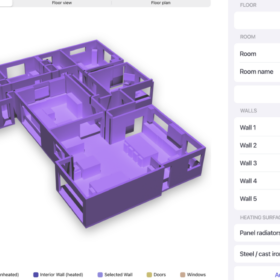
German startup offers design tool for heat pump installers
German software company Autarc launched a platform for residential heat pump projects, covering design, planning and customer project management functionality. It uses LiDAR imaging to enable heat load and hydraulic balancing calculations, as well as visualizations.
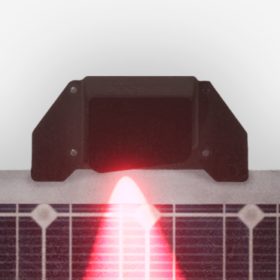
Sun-X secures patent for PV sensor that measures soiling, yield loss
Germany-based Sun-X says it has patented a soiling sensor for PV modules that accurately measures dirt levels, determines yield loss, and assesses optimal cleaning times.

EU-funded project seeks set up pilot production of large-area perovskite PV modules
The EU-funded Laperitivo project aims for 22% efficiency in 900 cm² opaque perovskite modules and 20% efficiency in semi-transparent ones. The project partners include imec, Fraunhofer ISE, TotalEnergies, and EDF.
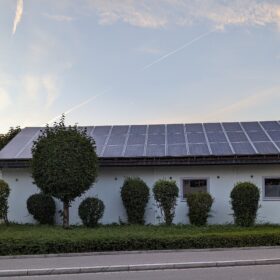
Photovoltaic systems are a no-regret investment decision
New research from Germany shows that investing in residential PV remains an optimal choice even when price breaks on electricity and natural gas are applied. The scientists quantified the savings that PV systems achieved between 2019 and 2022, when the COVID-19 crisis and the outburst of the war in Ukraine made prices in the electricity markets extremely volatile.

Germany’s new solar installations hit 790 MW in August
Germany’s new solar installations surged to 790 MW in August, contributing to 10.23 GW of newly installed PV capacity for the first eight months of this year.
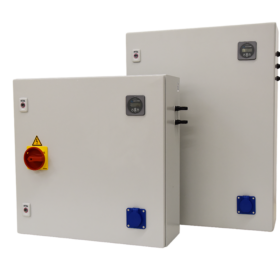
Solar cabinet for water disinfection systems
German fluid management company Lutz-Jesco introduced a system aimed at supporting pumping and water disinfection in cases of blackouts. The hub is preconfigured to work with solar panels, a battery charge controller, an inverter, and cabling.
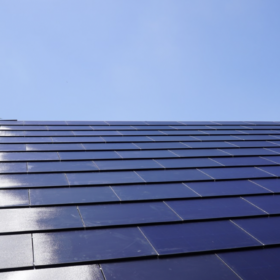
Paxos Solar unveils glass-glass PV tile with heat pump integration
Paxos Solar has developed a new glass-glass PV tile that integrates with heat pumps, featuring Longi’s back-contact solar cells. The 44 W, 59.5 cm x 48 cm tile can also produce heat for residential systems.
