
The effects of solar module elevation on ground-mounted PV
Scientists in Hungary found that ground-mounted PV modules at an intermediate elevation of 1.1 m achieve the highest efficiency and power output due to improved airflow and reduced cell temperature. Their study also estimated a levelized cost of electricity of $0.0843/kWh and 577.78 kg CO₂ mitigation over 25 years, while noting results are specific to concrete surfaces.

Hungary launches grants for residential battery storage
Hungary has opened applications for a program offering up to HUF 2.5 million ($7,820) per household to support residential battery storage, prioritizing grid-exporting solar users and small rural settlements.

Hungary adds 1.1 GW of solar in 2025
Hungary deployed over 1 GW of solar for the third consecutive year in 2025, driven largely by grid-scale solar additions. There are concerns momentum could slow in the coming years due to no new connection permits for large-scale projects authorized over the last three years.

Hungary to host 450 MW solar plant using back-contact modules
Solarpro says it is building a 450 MW solar power plant in northern Hungary using Longi modules.
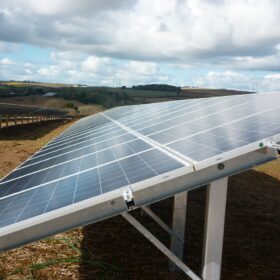
Slovak researchers predict PV inverter output without weather sensors
Researchers in Slovakia have demonstrated a machine-learning framework that predicts PV inverter output and detects anomalies using only electrical and temporal data, achieving 100% accuracy in classifying inverter output states under static operating conditions at a solar installation.
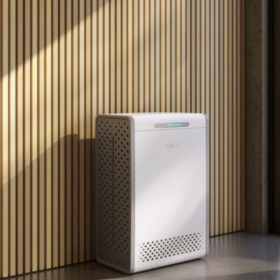
Hungary launches $305 million subsidy for residential battery storage
The Hungarian government says its new HUF 100 billion ($305.4 million) program will support 10 kW home battery systems to boost solar self-consumption and cut evening-peak demand.
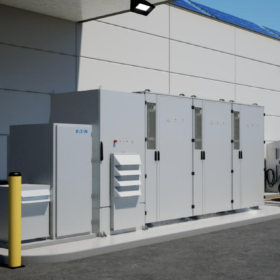
Hungary opens $151 million grant scheme for business energy storage
Hungary’s National Energy Agency has launched a HUF 50 billion ($151.34 million) grant program for businesses to install energy storage systems, including options paired with onsite renewable generation.

Kyrgyzstan, Hungary sign $300 million solar development deal
Kyrgyzstan’s National Investment Agency and Hungary’s Electron Holding have agreed to develop up to 300 MW of solar capacity in Kyrgyzstan with planned investments of $300 million.

PV-powered thermal distillation device with self-cleaning, cooling
Scientists in Hungary have built a prototype of a thermal distillation device, supported by PV power. The PV panels use an IoT component that self-cleans when dust is detected and cools itself when the temperatures are too high. The system achieved a daily freshwater yield of 6.1 L/m2⋅day.
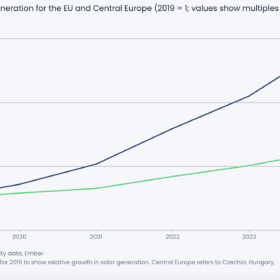
Solar output up sixfold in Czechia, Hungary, Poland, Slovakia
Czechia, Hungary, Poland and Slovakia’s cumulative solar generation increased sixfold between 2019 and 2024, while each country made efforts to reduce its coal dependency. However, energy think tank Ember says a lack of battery storage uptake and solar targets below the EU average risk derailing progress.
