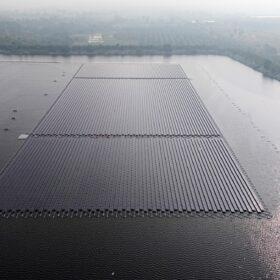
Ciel & Terre unveils new honeycomb structure for floating PV
The new Fusio floating structure features a triangular design and is said to be particularly suited to markets such as India and Southeast Asia. Tilt angles can be configured at either 5° or 12°.

India installs record 29.5 GW of solar in first nine months of 2025
India’s solar additions surged 70% year on year to 29.5 GW in the first three quarters of 2025, driven by rapid utility-scale and rooftop deployment, according to JMK Research.
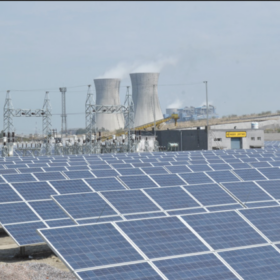
Toshiba to deploy AI-driven monitoring system at 165 power plants in India
Toshiba JSW Power Systems will supply NTPC Ltd. with a centralized monitoring system to oversee 165 thermal and renewable power plants across India.

Avaada signs deal for 5 GW of solar, 5 GWh of BESS in India
Avaada Group will deploy 5 GW of solar, 1 GW of wind, and 5 GWh of battery energy storage system (BESS) capacity in western India to support grid stability and extend renewable power supply beyond daylight hours.
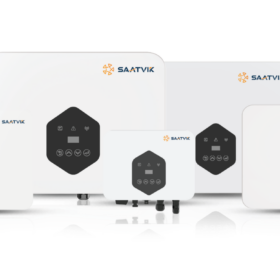
Saatvik Green unveils inverter series for residential, C&I solar
The U.S. manufacturer has launched the UDAY on-grid solar inverters series including single-phase inverters (1.1 kW–6 kW) for residential and small commercial rooftops and three-phase inverters (6 kW–50 kW) for residential, commercial and industrial applications.
Steel foundations: from corrosion to confidence
In this pv magazine Webinar, we look at steel corrosion in the field, particularly for those parts of the structure that are in contact with the soil. Manufacturer ArcelorMittal has put its many years of experience in the steel industry to good use in developing its Magnelis coating, that promises to prevent steel corrosion even in the harshest environments.
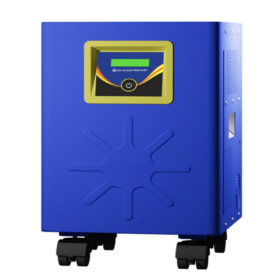
Eastman introduces integrated inverter-battery system for solar users
India’s Eastman Auto & Power has unveiled a plug-and-play inverter with a built-in lithium-ion battery, targeting simpler and more efficient solar use for households and small businesses.
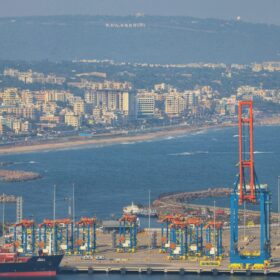
India’s large-scale solar expansion faces land, technical, climate hurdles
Developers are navigating fragmented land constraints, transmission limits, and extreme weather conditions as India scales utility-scale solar to meet its 2030 clean energy targets.
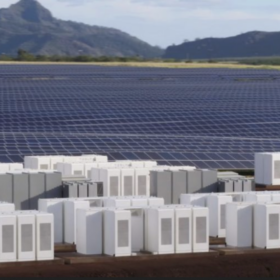
India reaches 490 MWh energy storage capacity by June 2025
Policy incentives and hybrid solar-plus-storage projects are accelerating India’s energy storage sector despite a slowdown in first-half installations.
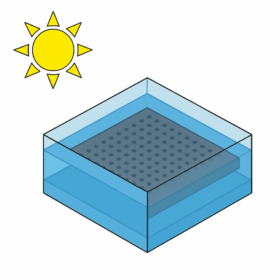
Cooling PV panels with stagnant water layer
Researchers have developed a stagnant water layer cooling concept and tested it using seawater, tap water, and desalinated water. The panel temperature decreased by up to 8.2 °C, while power output increased by approximately 28%.
