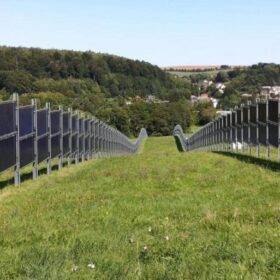
Next2Sun bets on Italy for market expansion
Despite difficulties in France, Next2Sun still sees growth opportunities in Europe, starting with Italy. The German agrivoltaics supplier tells pv magazine that it is also increasingly active in Japan.
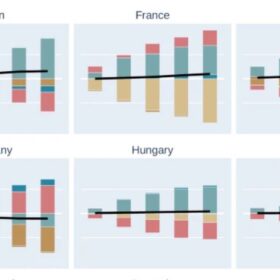
Massive amounts of vertical PV may reshape European energy market
A group of scientists led by the Joint Research Centre (JRC) of the European Commission has analyzed the impact of deploying more vertical PV systems in the European energy markets and has identified potential advantages that may be offered by this scenario. These include lower electricity prices, lower system costs, and an increasing power exchange between neighboring countries.
Bee Solar, Huasun sign MoU to develop gigawatt-scale European supply chain
The Italian company and Huasun Energy are teaming up to produce wafers, cells and modules for the European market, with the aim to be the most cost-competitive in Europe. The two companies are working to start production in 2026.
The Hydrogen Stream: Brazil signs hydrogen support scheme
As Brazil starts its low-carbon hydrogen program, industry consolidation continues with two M&A operations in Italy and Texas.
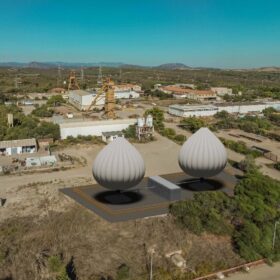
100 MW hybrid ESS set for Sardinia
A 100 MW hybrid gravity and battery ESS will use the mine shafts of large underground coal mine on the Italian island of Sardinia to offer a novel energy storage solution, in an 80/20 mix of BESS and gravity.
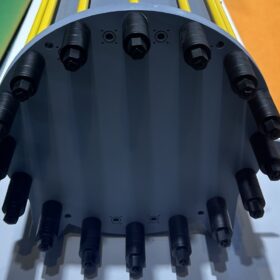
The Hydrogen Stream: Canada, Italy announce funds for hydrogen trade, infrastructure
Canada and Italy announced funds for hydrogen projects. Meanwhile, a team of researchers explained that Australia should ship hydrogen to Japan by 2030 via methyl cyclohexane (MCH) or liquid ammonia (LNH3), not completely rejecting the option of liquid hydrogen (LH2).
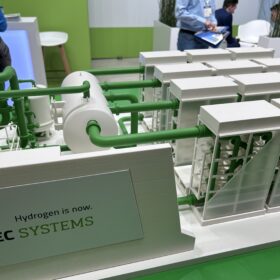
H-TEC to start 1 GW capacity production of PEM electrolyzers in September
H-TEC will be able to produce more than 1 GW of electrolyzers starting next year. “We installed the first production lines and will have our official opening in September this year,” Maximilian Kuhnert, sales manager at H-TEC, told pv magazine.

EP Produzione secures 170 MW battery storage in Italian capacity market auction
Italy’s latest capacity market auction has catalyzed 233 MW of new capacity with the lion’s share of projects secured by EP Produzione across two battery storage developments.
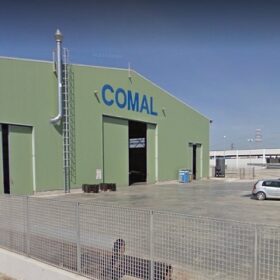
Comal plans 500 MW solar module factory in Italy
Comal says it has acquired an industrial building near L’Aquila in central Italy for a 500 MW solar module factory. Production is scheduled to start in 2025.
Israel’s N2OFF enters solar business
Agri-food tech specialist N2OFF says it has entered the PV business by lending €375,000 ($407,000) to Israeli PV developer Solterra Renewable Energy. The loan is part of a larger €500,000 agreement, with the remaining €125,000 to come from other parties.
