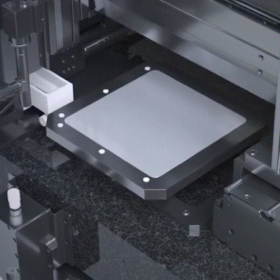
NPC Incorporated, Gosan Tech partner on perovskite solar module manufacturing
The alliance aims to utilize Gosan’s advanced inkjet printing technology in the manufacturing of perovskite modules, mainly for the Japanese and US markets.

The Hydrogen Stream: Japanese researchers develop green rust catalyst
Japanese researchers have developed a green rust–based catalyst for sodium borohydride, while South Korean scientists have created a framework to assess liquid hydrogen storage tanks for unmanned aerial vehicles (UAV).
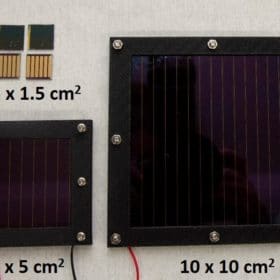
Japan launches subsidies to accelerate perovskite solar deployment
The Japanese government has launched applications for two targeted funding schemes to accelerate deployment of lightweight perovskite solar tech and incentivize battery-backed systems that enhance grid resilience and economic viability.

The Hydrogen Stream: Japanese researchers develop low-temperature hydrogen battery
Institute of Science Tokyo researchers proposed a battery with magnesium hydride (MgH2) as the anode and hydrogen (H2) gas as the cathode. Meanwhile, researchers at Chung-Ang University proposed chloride-resistant ruthenium (Ru)-based nanocatalysts for direct electrolysis and hydrogen production from seawater.

Making the business case for solar-plus-storage with heat-pumps in Japan
A Japanese research team has evaluated the affordability of photovoltaic-battery systems featuring heat-pump water heaters and air conditioning units across nine regions of Japan. They analyzed three price policies and two loan types, identifiying a tradeoff between net demand and cost according to the capacity of the solar-plus-storage system.

Itoki, Hitachi, Tokuyama recycle solar glass for office furniture
The Japanese companies have used their unique technologies to demonstrate how glass from end-of-life PV panels can be used in office furniture components, specifically in an office privacy cabin.

NEDO outlines R&D concepts to expand solar adoption in Japan
Japan’s New Energy and Industrial Technology Development Organization (NEDO) has launched a 2025–29 project with 24 themes to advance the development of next-generation solar cells, site-specific systems, grid stability, and recycling in line with its carbon neutrality goal.

Panasonic testing new energy management system to combine solar, heat pumps, batteries
The Japanese company said the first pilot projects are being carried out in the Tokyo metropolitan area with the support of Japanese oil giant Eneos.
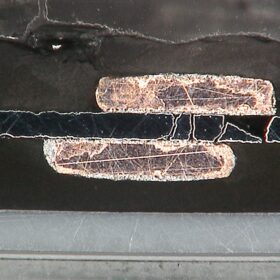
Investigating solar glass quality for recycling in new glass products
A team of Japanese scientists explored how typical PV panel component materials affect the ability to re-use end-of-life PV cover glass. Specifically, they measured contamination by materials, such as aluminum, silicon, carbon, and copper, and their effects in melted PV panel glass cullet.
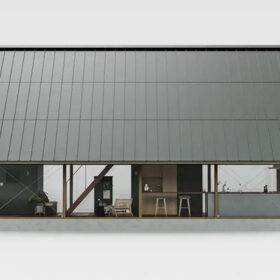
Japanese startup debuts silver-colored BIPV solar module
The new product weighs 13 kg/m2 and is claimed to be particularly suitable for building facades. It features a power ouput of 75 W and a junction box with an IP-68 rating.
