
Turkey attracts 77 applications in 650 MW solar tender
Turkey’s latest renewable energy tender received 77 applications from 38 different companies across eight available solar projects, including the country’s first floating PV plant. Winners will be announced before the end of the year.

Alfa Solar and Astronergy plan solar cell, wafer venture in Turkey
Astronergy Europe says its new venture with Alfa Solar will build an integrated cell and wafer plant with 2.5 GW of initial capacity in Turkey.
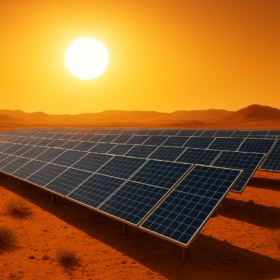
Sensorless approach for PV panel temperature monitoring
Researchers in United Arab Emirates have developed a novel model that relies on either the open-circuit voltage or the maximum power point voltage to estimate PV module operating temperature without using sensors.
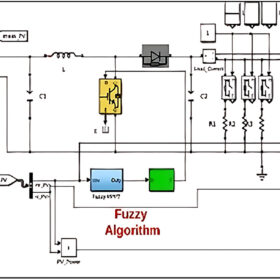
Optimizing PV system tilt angle, MPPT using fuzzy logic controller
Researchers in the Middle East have developed a fuzzy logic controller that simultaneously optimizes the tilt angle of PV systems and performs maximum power point tracking (MPPT). Year-long simulations indicate that the proposed approach increases power generation by approximately 20%.

All low-cost PV monitoring systems at a glance
A group of scientists in China conducted a comprehensive review of existing low-cost photovoltaic monitoring approaches. They found that only 11 out of 88 studies related to PV monitoring incorporate machine learning. The researchers urge the scientific community to place greater emphasis on lightweight machine learning solutions and smartphone-based integration.
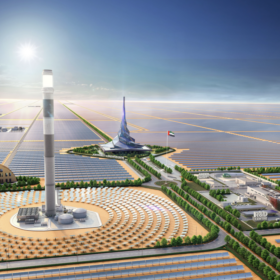
Dubai expands storage in seventh phase of world’s largest solar park
Dubai Electricity and Water Authority (DEWA) says the seventh phase of the Mohammed bin Rashid Al Maktoum Solar Park will pair 2 GW of solar with 1.4 GW of storage, up from 1 GW, after receiving 49 expressions of interest under its 2050 clean energy plan.

Bahrain to host world’s largest single-site rooftop solar power plant
A power purchase agreement is in place for a 123 MW solar project in Bahrain that will span 14 sites including the world’s largest rooftop solar installation, a 50 MW system on top of a 262,000 m2 stockyard shed.
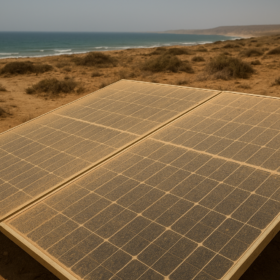
The impact of dust on PV systems in arid coastal environments
A Saudi–Egyptian research team investigated the effects of four types of dust on photovoltaic panels in arid coastal environments, finding that power losses can reach up to 48%.

Saudi Arabia awards 3 GW of solar in sixth renewables tender round
Saudi Power Procurement Co. (SPPC) has concluded the sixth phase of the country’s National Renewable Energy Program by awarding four solar projects and one wind farm. They include the 1.4 GW Najran solar site, which has the second-lowest levelized cost of electricity (LCOE) for solar energy to date.

Jordan opens solar tender for public hospitals
Jordan has launched a tender to supply and install solar thermal water heating systems at nine public hospitals, with applications due Nov. 6.
