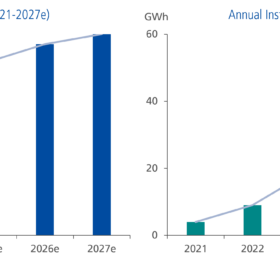
Global solar enters period of adjustment, as market conditions redefine rules of competition
Global solar growth is flattening in major markets as oversupply from China and India drives prices down and shifts competition from sheer volume to execution, policy alignment, and system integration. Across the U.S., Europe, and China, energy storage is becoming essential for project viability, making PV-plus-storage and strong EPC partnerships the new basis for winning projects in 2026 and beyond.
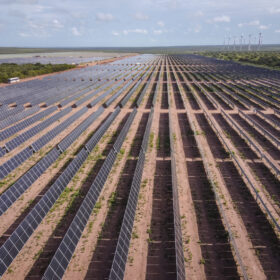
Capex-driven strategies can reduce solar LCOE by 20%
An international research group has conducted a literature review of capital expenditure-driven levelized cost of electricity optimization strategies for utility-scale PV systems. Tracking optimization, system voltage escalation, and advanced system design are identified as the most promising cost reduction areas. “The next wave of PV research must be LCOE-native, system-level, and deployment-validated,” a member of the research group said.
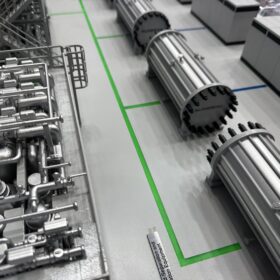
The Hydrogen Stream: RWE commissions 100 MW hydrogen electrolyzer
RWE has started commissioning a 100 MW electrolyzer in Germany to supply renewable hydrogen under long-term contracts, while Hydrogen Utopia International and Hydrogen Systems are advancing plans to build waste-to-hydrogen plants in Saudi Arabia.

Türkiye installs 4.7 GW of solar in 2025
Türkiye’s cumulative solar capacity is approaching 25 GW after another strong year for new deployments, led by installations for self-consumption in the commercial and industrial market.

Saudi Arabia reveals qualified bidders for 3.1 GW solar auction
Saudi Power Procurement Co. (SPPC) has announced the qualified developers for the seventh round of Saudi Arabia’s renewable energy tender program, featuring four solar projects with a combined capacity of 3.1 GW.
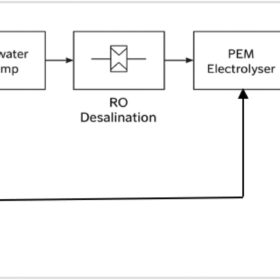
Off-grid floating PV-desalination system for hydrogen production
Scientists have simulated a solar-powered hydrogen production system comprising 32,050 photovoltaic panels, a pumping system, a seawater reverse-osmosis desalination unit, an electrolyzer, and a hydrogen storage tank. Operation of the system in Oman could potentially yield a levelized cost of electricity of $0.05/kWh and a levelized cost of hydrogen of $9.5/kg.

Saudi Arabia connects 7.8 GWh battery storage project to grid
Saudi Electricity Co. has completed a massive storage project across three sites, enhancing grid stability and renewable integration. Once fully operational, the installation will become the world’s largest battery energy storage system (BESS).
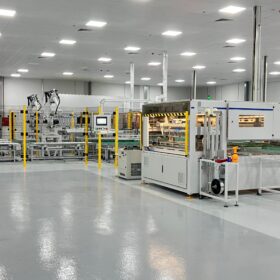
Ecoprogetti ramps up solar module production line in Oman
Italy’s Ecoprogetti has delivered a 400 MW fully automated solar module production line in Oman. The facility is the company’s second in the country, which it says equates to a majority share of Oman’s module manufacturing market.

Türkiye publishes rules for floating solar
Türkiye has published a regulatory framework covering the legal basis for developing floating solar plants on reservoirs and dams. The rules establish where floating solar can and cannot be built and how projects can be approved.
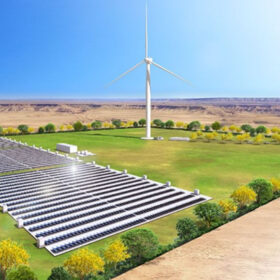
Toshiba ESS tests hybrid wind-solar project with storage in Saudi Arabia
Toshiba Energy Systems & Solutions Corp. (Toshiba ESS) has started testing batteries and energy management solutions to stabilize electricity in remote Saudi Arabia through a hybrid wind-solar pilot project. The project will run until May 2028 to evaluate power- and energy-oriented batteries and optimize battery use.
