
Australian renewables to dominate generation in nuclear future
The Australian opposition has released energy plan modeling showing nuclear power could be up to 44% cheaper than current government projections, while forecasting that renewable generation will continue to dominate electricity production.

PV Hardware’s new solar tracker withstands winds up to 238 km/h
Spain-headquartered solar tracker company PV Hardware has developed a tracker product able to withstand severe cyclonic winds up to 238 km/h, as well as a fixed tilt system which can withstand winds up to 288 km/h.
Australia’s batteries surf revenue wave on back of volatile power prices
Investments in battery storage within Australia’s National Electricity Market (NEM) are increasingly profitable due to higher power price volatility and changing market dynamics, according to the latest report by Wood Mackenzie. Going forward, four-hour storage systems are projected to have fastest return on investment.
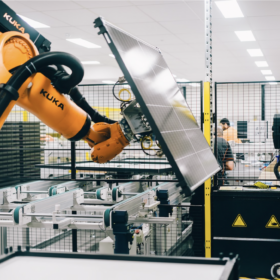
New report urges Australia to reduce solar supply chain reliance on China
A new report by the United States Studies Centre (USSC), a joint venture of the American Australian Association and University of Sydney, encourages Australia to deeply engage in global solar supply chains and reduce its reliance on China.

Australia’s CIS Tender 1 to deliver 2.75 GW of solar
Australia’s Capacity Investment Scheme (CIS) Tender 1 will add 2.75 GW of solar generation to the National Electricity Market (NEM), with 12 of the 19 successful bids allocated across New South Wales, Victoria, and Queensland.
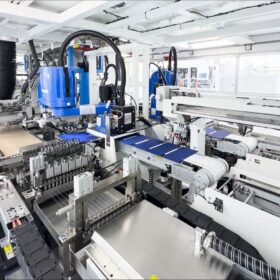
SunDrive achieves copper plating production yield of more than 99%
Australian solar module manufacturing is nearing large-scale production, as SunDrive has achieved a copper plating production yield exceeding 99%, while also signing a deal with Capral Aluminium.

Battery technology offers fast charging for industrial vehicles under 10 minutes
UK-based battery supplier Echion Technologies has partnered with Australia’s Switch Technologies to demonstrate its ultra-fast charge technology in a Toyota Land Cruiser 79 Series off-road vehicle.

Jinko Power seeks nod for 600 MW of solar, 800 MWh battery in Australia
Chinese solar developer Jinko Power has filed an application with the Australian government for a 600 MW solar array and 800 MWh battery energy storage project in the state of Queensland.

ADB commissions 500 kW solar project with 2 MWh of storage in Tuvalu
The Asian Development Bank (ADB) has commissioned a 500 kW solar rooftop project in Tuvalu’s capital, Funafuti, along with a 2 MWh battery energy storage system (BESS).
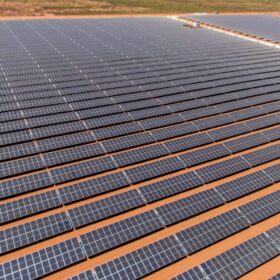
Australian utility switches on solar farm built for cyclonic conditions
APA Group has officially opened a solar project, designed to withstand sustained wind speeds of almost 300 kph, along with a co-located battery energy storage system in Western Australia’s Pilbara region.
