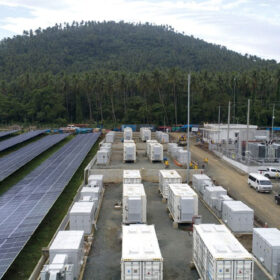
Philippines mandates energy storage for renewables plants over 10 MW
Department of Energy (DOE) order sets out new rules for mandatory energy storage, including a minimum capacity of at least 20% of the generating plant’s installed capacity. DOE also calls for energy storage systems (ESS) installations to have grid supporting capabilities, such as grid-forming inverters to help stabilize voltage and frequency.
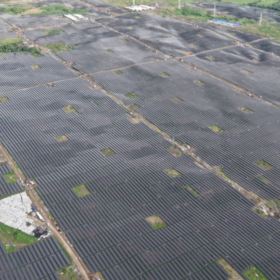
World’s largest solar-plus-storage project completes initial grid synchronization
The first phase of the MTerra solar project in the Philippines, set to be the world’s largest solar-plus-storage site once completed, has achieved initial synchronization and energization to the Luzon grid. Project developers are anticipating the project to being exporting power by the end of the month.
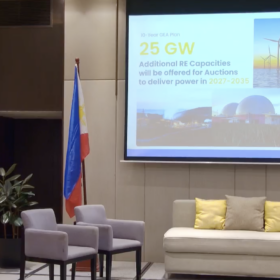
Philippines to auction 25 GW of renewables by 2035
The Philippines has unveiled plans for its next four green energy auctions, one of which will focus on rooftop solar and solar-plus-storage in selected areas of the country. Another forthcoming auction will concentrate on solar on canals, agrisolar and solar on stilts over fish ponds.

Philippines accelerates permits for solar net-metering
The government of the Philippines has announced a series of reforms to its net-metering scheme, including faster permitting, the introduction of multi-site and aggregate net-metering, as well as allowing qualified end users to retain ownership of Renewable Energy Certificates for trade on the Renewable Energy Market.
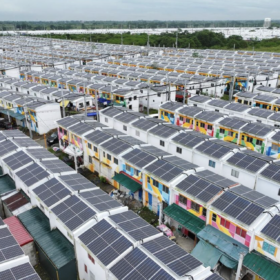
Philippines commissions 6.5 MW solar project for social housing
The 6.55 MW project, hailed as the world’s first grid-connected, solar rooftop project within a social housing community, equipped almost 2,000 houses with solar panels.

Philippines increases allocation under fourth energy auction
The Philippines Department of Energy (DOE) says its fourth green energy auction marks a shift from pilot to mainstream deployment, with final approvals raising total capacity across solar, wind, and storage projects to nearly 10.2 GW, including 4.1 GW of ground-mounted and 2.2 GW of floating solar.

Meralco increases stake in Philippine’s largest solar developer
Manila Electric Company (Meralco), via its subsidary MGen Renewable Energy Inc, has increased its stake in SP New Energy Corporation (SPNEC) after the transfer of 10.8 billion exchangeable shares in a deal valued at PHP 13.76 billion ($233.5 million). The company is working on the world’s largest solar-plus-storage project currently under development.
Philippines raises FIT levy for renewable payments
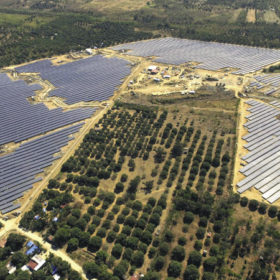
The energy regulator of the Philippines has approved an increase in the feed-in tariff allowance (FIT-All) to PHP 0.2073 ($0.004)/kWh from PHP 0.1189, with the new rate set to take effect next month.

Philippines approves world’s largest solar project for grid connection
The Energy Regulatory Commission (ERC) of the Philippines has given the MTerra Solar Project permission to develop its own dedicated transmission facilities and connect to the Luzon grid. The first phase, encompassing 2.5 GW of solar and 3.3 MWh of battery storage, is due for completion in 2026.

IEA says cost of capital for solar remains high in Southeast Asia
The International Energy Agency (IEA) says the cost of capital for solar remains higher in Southeast Asian countries than it does in other emerging and developing economies.
