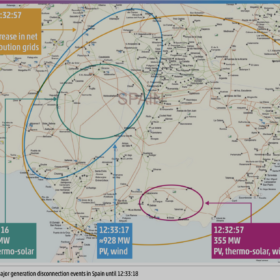
Entso-E report finds systemic failures behind 2025 Iberian blackout
The European Network of Transmission System Operators for Electricity (Entso-E) has published its final root cause report on the April 28, 2025, blackout in Spain and Portugal, finding failures across grid operations, generation, and regulations, and issuing 22 recommendations to strengthen European grid resilience.

The Hydrogen Stream: Atome secures $420 million debt for Paraguay plant
Atome says it has secured a $420 million debt package for a $650 million low-carbon fertilizer project in Paraguay producing 260,000 metric tons (MT) per year, while Asahi Kasei says it has begun installing a 1 MW-class electrolyzer at Finland’s first commercial hydrogen refueling station.
Chemitek offers solution for drone-based cleaning of agrivoltaics
The Portuguese company said its new Drone AgroPV Cleaning Agent is scheduled for release in June. It has a safe formulation for crops and soil.
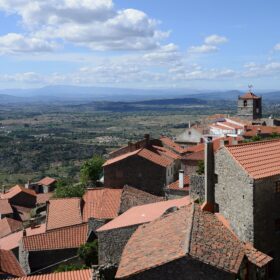
Campaign group protests giant solar projects in Portugal
A campaign group in Portugal is challenging large-scale solar developments in Beira Baixa, Portugal. Developers of a proposed 867 MW solar site told pv magazine sustainability is central to the project, including biodiversity measures and tree planting at a rate 18 times higher than removals.
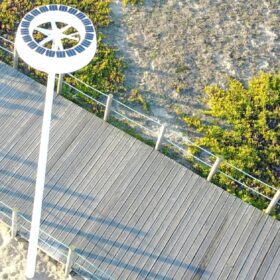
Hybrid solar-wind streetlight offers multiple functions
Omniflow has developed a line of hybrid solar-wind streetlights. It offers optional solutions to integrate for security, phone recharging, and Internet of Things applications.

Chemitek Solar launches cleaning solutions for agrivoltaics
Portugal-based Chemitek Solar is developing biodegradable cleaning and anti-soiling products for PV panels that share land use with agricultural production.

The Hydrogen Stream: Japanese researchers develop green rust catalyst
Japanese researchers have developed a green rust–based catalyst for sodium borohydride, while South Korean scientists have created a framework to assess liquid hydrogen storage tanks for unmanned aerial vehicles (UAV).
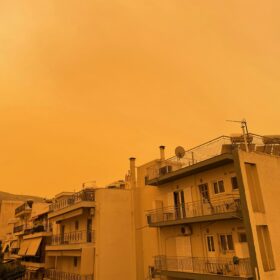
Saharan dust events can reduce PV power output in Mediterranean area by up to 50%
New research from Hungary shows that Sarahan dust events can reduce PV power output in five Mediterranean countries by an average of 25-40%. The scientists stressed the need for including real-time dust monitoring and cloud interactions in solar forecasting.

The Hydrogen Stream: France, Germany back nuclear H2, Southwestern Corridor
France and Germany have pledged support for the Southwestern Hydrogen Corridor and have agreed to collaborate on nuclear-based hydrogen support and joint research.
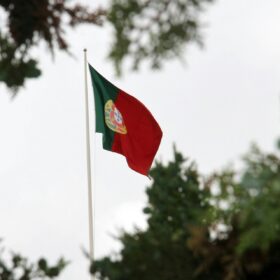
Portugal surpasses 6.1 GW of solar capacity
Portugal’s solar capacity reached 6.17 GW in May, according to the country’s renewable energy association. While distributed generation is steadily expanding, a quicker rate of deployment across all market segments will be needed to meet 2030 targets.
