
Argentina inaugurates first commercial lithium hydroxide production plant
Part of mining company POSCO Argentina’s Sal de Oro integral lithium project, the plant was inaugurated at the General Güemes Industrial Park in the city of Salta. It is estimated to produce 25,000 tons of lithium hydroxide per year.
Perovskite solar cell built with slot die coating achieves 19.17% efficiency
A team from Jeonbuk National University in South Korea used slot die coating (SDC) to produce uniform high-quality perovskite films, which they used in a perovskite solar cell that achieved 19.17% efficiency and lab cell-sized modules that achieved 17.42% efficiency.

The Hydrogen Stream: TE H2 to secure land for 1 GW Chbika project in Morocco
Morocco and TE H2 have agreed to reserve land for the Chbika hydrogen project in Morocco. They aim to build 1 GW of solar and wind capacity to annually produce 200,000 tons of green ammonia for the European market.

New tech to recover high-purity silicon powder from end-of-life solar panels
Korean researchers have used thermal and wet gravity separation (WGS) to separate EVA from reclaimed silicon powder in end-of-life PV modules with “minimal” chemical usage. The proposed technique provides silicon powder that could be reused as a raw material for upcycling into silicon nitride, silicon oxide, or silicon carbide.
LG Energy Solution announces ESS revenue growth, new products
LG Energy Solution expects strong demand for energy storage and plans to release a high-capacity lithium iron phosphate product with 20% higher energy density, along with other offerings. The South Korean battery maker says it aims to begin US production of energy storage system (ESS) batteries in 2025 and may convert European electric vehicle (EV) production lines to ESS.
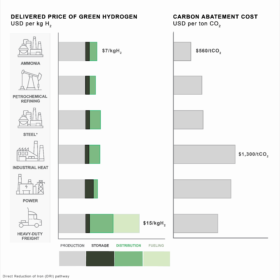
The Hydrogen Stream: Harvard researchers say H2 costs underestimated
Harvard University researchers say hydrogen costs are underestimated due to unaccounted storage and distribution variability across sectors, while Kore Infrastructure has told pv magazine that it aims to reach a levelized cost of hydrogen (LCOH) of between $1/kg and $2/kg.
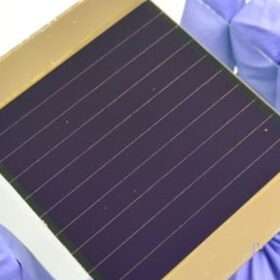
Perovskite solar module achieves 21.44% efficiency via new passivation tech
Researchers have developed a novel passivation process for formamidinium lead iodide perovskite films, which reportedly resulted in solar cells with 23.69% power conversion efficiency, and modules with 21.44% certified efficiency. After 1000 hours, the hetero-polytypic passivated devices maintained 92% of their initial efficiency, outperforming untreated devices.
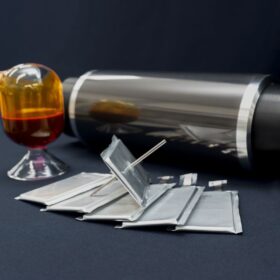
LG Chem develops material capable of suppressing thermal runaway in batteries
LG Chem has announced that its Platform Technology R&D team has developed a temperature-responsive Safety Reinforced Layer (SRL), a material which is described as capable of surpressing thermal runaway. The material was analyzed in collaboration with researchers from Pohang University of Science and Technology (POSTECH) in South Korea, while the safety verification was conducted in partnership with LG Energy Solution.

A few micrograms of particulates enough to affect PV power generation
New research from South Korea has shown that even a 10 μg/m3 increase in atmospheric particulate matter can considerably reduce solar power generation and impact revenue of PV system owners.
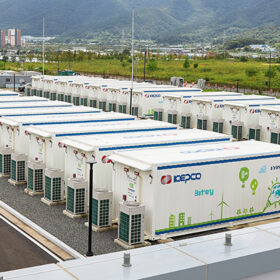
South Korea’s largest battery comes online
Korean utility KEPCO completed a 978 MW battery project that us billed as Asia’s largest battery energy storage system for grid stabilization purposes.
