
Scientists achieve 25.4% efficiency in perovskite solar cells with enhanced stability using multivalent ligands
Researchers have used multivalent amidinium ligands to boost perovskite solar cell efficiency to 25.4%, achieving over 95% stability after 1,100 hours at 85 C. The proposed approach enables controlled low-dimensional passivation layers, offering a practical route for durable, large-area perovskite devices.
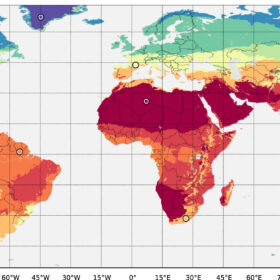
EU Joint Research Centre proposes novel PV climatic classification
A research group from the European Commission Joint Research Centre has developed a new PV climatic classification, the first to address annual yield and performance ratio. Their work resulted in 10 globally applicable clusters. “It challenges the assumption that many more classes are needed to capture PV-relevant climate,” the researchers said.

The Hydrogen Stream: Scatec-led 100-MW green project in Egypt to step operations in the coming months
The consortium expects to reach Final Investment Decision (FID) on the full-scale project in the Ain Sokhna Industrial Zone in the coming months, while Brazil’s Federal Court provisionally ordered the suspension of construction activities of Solatio’s project in the State of Piauí.
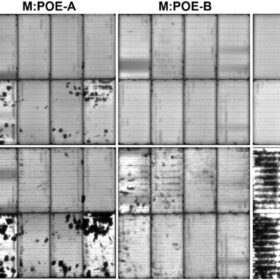
Not all POE encapsulants protect TOPCon solar cells from corrosion
UNSW researchers found that some POE encapsulants can trigger severe corrosion in TOPCon solar modules, causing up to 55% power loss under damp-heat conditions. Their study highlights that module reliability depends on the exact encapsulant formulation, not just the polymer type.

Greek startup launches direct PV water heating solution
Axinar has launched SolBox, a direct PV water heating system that powers electric resistance accumulators without thermal collectors. It’s designed for homes and businesses, offering real-time monitoring, MPPT optimization, and automatic grid backup.
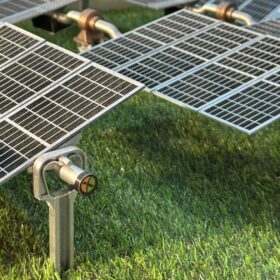
PV could outcompete agriculture in Spain within 20 years
Scientists have analyzed the competition between photovoltaics and agriculture for land use in Spain by studying 134 different crops in 15 regions. Using a real options framework, they found that falling solar PV costs and high irradiance in southern Spain could make solar more profitable than farming by the mid-2040s, highlighting growing land-use competition.
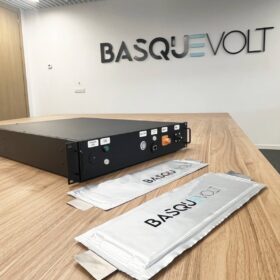
Iberdola-led project develops solid-state battery module for stationary storage
Basquevolt and Bcare have successfully developed and integrated the first solid-state cells into a module for stationary applications, accomplishing this within the Iberdrola-led ASTRA-CC project (2023–2025).
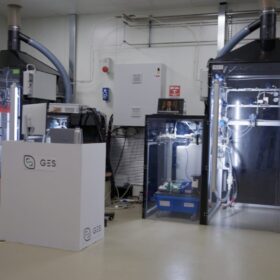
GES rolls out manganese-hydrogen battery with significant cost edge over lithium-ion
The Italian company said the manganese-hydrogen battery it has developed represents an advanced solution for long-duration energy storage. The technology enables energy to be stored for many hours or even days, overcoming the structural limitations of lithium-ion batteries.
Researchers achieve record perovskite solar module stability under light, heat, and UV stress
An international research team has developed a new two-dimensional perovskite interlayer based on a co-crystal engineering strategy for more robust perovskite films. It demonstrated improved performance in small area perovskite solar cells and, in a 48 cm2 module, contributed to retain 95% of initial efficiency after 5,000 h.

Dutch long-duration energy storage project targets sub-€50/kWh costs with innovative technologies
The SLDBatt project brings together TRL 7 battery technologies – including molten sodium‑salt, saltwater acid–base flow, and hydrogen–iron flow batteries – to deliver an innovative and cost-effective long-duration energy storage solution.
