
Agrivoltaics for arboriculture
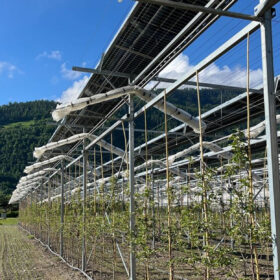
Swiss company Insolight inaugurated a 250 kW agrivoltaic installation on apple, pear, and apricot orchards in Conthey, producing 300 MWh per year for the grid, in collaboration with Agroscope, Romande Energie, and the canton of Valais.

Germany’s largest agrivoltaic project goes online
Vattenfall has commissioned a 76 MW agrivoltaic plant in Germany under a long-term power purchase agreement (PPA) with a subsidiary of Deutsche Telekom AG.
Decision making tool for crop selection in agrivoltaics
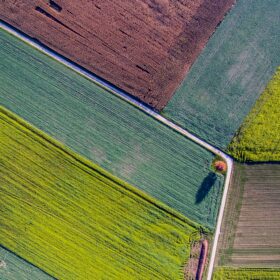
Researches in Germany have created a comprehensive crop selection tool for agrivoltaics across more than 25 countries. The proposed matrix evaluates species-specific responses of 12 major crop types to shading, microclimate changes, and crop growth, while also assessing their water needs, shade tolerance, and space requirements.

Agrivoltaics for sugarcane
Brazilian scientists have investigated the potential of agrivoltaics on sugarcane fields and have found this combination may provide benefits in terms of both agricultural and electricity yield. Their results showed that under certain conditions the sugarcane yield below the panels can be higher than that of plots without PV.
A closer look at vertical agrivoltaics
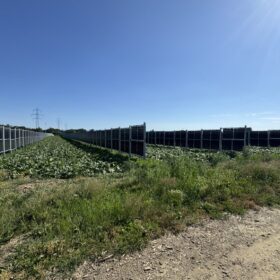
pv magazine visited a 1.9 MW agrivoltaic plant in Austria where pumpkins and soy are cultivated beneath vertically mounted PV structures supplied by Next2Sun.
What standards for agrivoltaics?
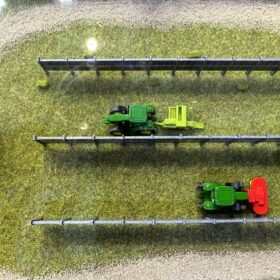
The technology which combines solar PV panels and agriculture is gaining ground. IEC Standards for solar photovoltaic (PV) systems already exist, but more might be required, dealing with some of the more specific issues relating to agriculture.
Italy extends construction deadline for agrivoltaic tender
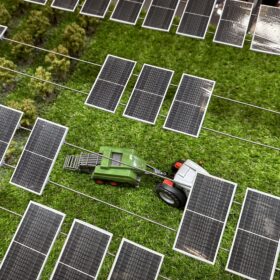
Italy has extended the construction deadline for 1.5 GW of awarded agrivoltaic projects to June 30, 2026, after developers failed to meet the original timeline.
Agrivoltaics for cherries
Switzerland’s Energie360° and solar tech specialist Insolight have agreed to build a 1,300-panel agrivoltaic plant on a cherry farm in Leuggern, Switzerland. The facility will combine crop protection and dynamic light management.

Fraunhofer ISE creates startup for agrivoltaics
The Fraunhofer Institute for Solar Energy Systems ISE (Fraunhofer ISE) has launched Diveo GmbH to plan and construct different kinds of agrivoltaic facilities without focusing on specific technologies.
All agrivoltaic system designs at a glance
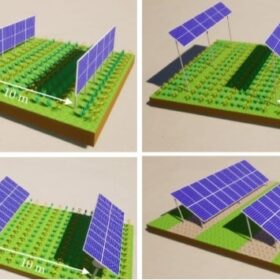
Researchers in Sweden and Italy analyzed the economics of one-axis, vertical, and elevated PV systems for agrivoltaic applications, finding that overhead agrivoltaic systems may perform better the further south they are installed. The discounted payback period and levelized cost of electricity were also calculated and compared.
