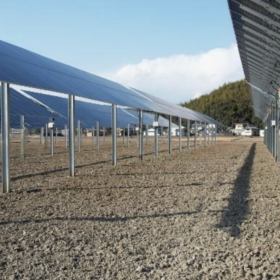
Idemitsu switches on 2 MW of solar above rice paddy
Japanese petroleum company Idemitsu Kosan has announced its 2 MW agricultural solar power plant, installed 3.8 meters above a rice paddy, has begun operating. The project features a community-based model that returns a portion of the profits from power generation to the farmers.
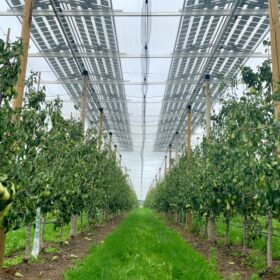
Long-term trade-offs of agrivoltaics on pear farming
A four-year study found that overhead solar panels in an Australian pear orchard reduced sun and hail damage but decreased fruit yield and blush coloration. While energy production and tree stress resilience improved, the findings highlight trade-offs for agrivoltaic systems, with potential applicability to other fruit crops like apples and cherries.
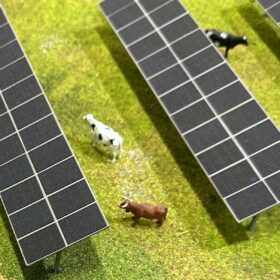
The impact of agrivoltaics on soil properties
New research shows how agrivoltaic systems can reshape soil by altering moisture, temperature, and microbial activity, creating heterogeneous zones under and between panels. Proper design and management can boost soil health and crop resilience, especially in degraded or arid regions, though long-term effects remain uncertain.

Optimal solar module row spacing for agrivoltaics across Europe
Researchers in Sweden developed a new methodology to optimize agrivoltaic systems across Europe, showing that row pitch, system type, and panel orientation must be tailored to local climate, crops, and regulatory constraints.

The impact of land slope on agrivoltaics feasibility
Brazilian scientists have developed a slope-based framework for agrivoltaics, finding that sites below 15% gradient offer the best balance between agricultural suitability and technical feasibility. Their review of 30 studies shows that steeper terrain can host PV systems with adapted designs, land-use limits, erosion risks, and rising installation costs.
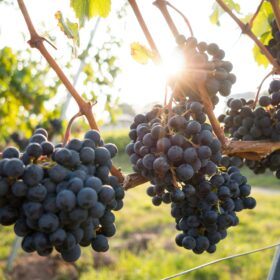
Agrivoltaics? Yes in my vineyard
Researchers in Spain surveyed 238 wine tourists in the Murcia region and found broad support for trellis-integrated agrivoltaics in vineyards, with 94% backing solar integration and most respondents seeing no landscape conflict.
Scientists say land-preservation costs should be factored into agrivoltaics’ LCOE calculations
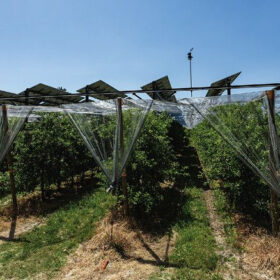
German researchers found that agrivoltaics costs far exceed agricultural benefits, raising doubts about subsidies and highlighting the need for more cost-competitive system designs.
All agrivoltaic cropping systems at a glance
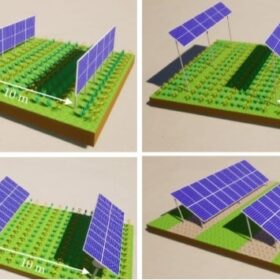
An international research team reviewed agrivoltaic systems, highlighting challenges in design, crop performance, and PV efficiency, while mapping their global potential. They call for innovative layouts, targeted crop selection, and improved modeling to maximize energy yield and land-use efficiency.

The impact of agrivoltaics on potato farming
New research from Italy has shown that agrivoltaic systems can reduce potato yield by up to 15% compared to full-light cropping. However, moderate early-season shading was found to delay soil-moisture depletion, extending biomass accumulation and improving water-use efficiency.

How to combine mechanized farming with agrivoltaics
An international study finds that successful agrivoltaic projects require farm-specific, holistic co-design that integrates PV layout with agricultural mechanization from the earliest planning stages. Without proper alignment between machinery, crops, and PV systems, agrivoltaics risk major land loss, lower field efficiency, and higher operating costs, undermining farm profitability.
