New simulation platform lets energy operators train against realistic cyberattacks
Researchers at Germany’s Fraunhofer FKIE institute developed PowerRange, a virtual simulation platform that helps power grid operators safely test cybersecurity measures and respond to realistic cyberattacks. The platform supports both traditional and renewable grids, offering immersive training across IT, OT, and control systems while highlighting the importance of coordination, communication, and practical defense strategies.
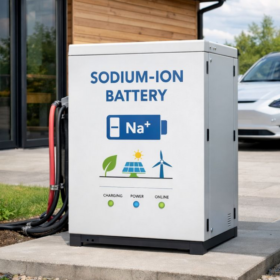
NanoMalaysia unveils sodium-ion prototype surpassing 300 Wh/kg
The new prototype ranks among the most advanced sodium‑ion battery systems reported worldwide.
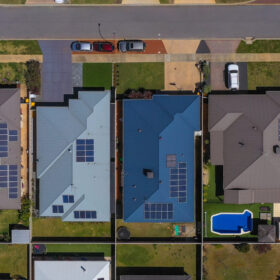
Rooftop solar rebounds in Australia, home battery demand surges
Australia’s rooftop solar market has bounced back into record-setting territory with 281 MW of new capacity registered across the country last month, marking the largest February total on record.
Growing pains: Grid congestion as a renewables bottleneck
The electricity grid is a real bottleneck for energy in the United States, and it’s not only utilities and grid operators who are struggling. Grid congestion also puts pressure on renewable energy project owners and is as much a business problem as it is a technical one, writes Alon Mashkovich, CEO of energy management business software supplier enSights.
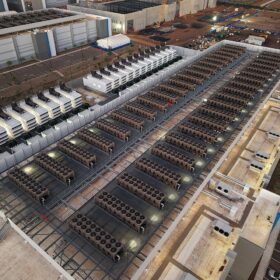
The limits to growth: The Malaysian way of navigating the data centre boom
Malaysia’s rising power demand, driven by industrial growth and data centers, is exposing grid and capacity constraints, prompting policies like Corporate Renewable Energy Supply Scheme (CRESS) to enable corporate renewable procurement while maintaining system cost recovery. A key factor is the System Access Charge (SAC), whose uncertain future trajectory affects long-term solar PPAs and investment decisions, making scenario-based modelling crucial for assessing project bankability.

Tunisia issues tender for 300 MW solar plant with 150 MW/540 MWh storage
The country’s first solar-plus-storage project will be located on a 400 hectare surface near Kébili, a town in the south of Tunisia and one of the main cities in the Nefzaoua region.
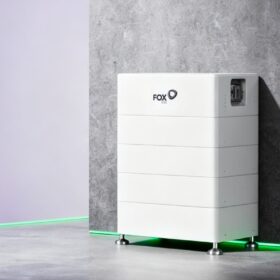
Energy Storage Inspection 2026: Fox ESS, SMA, SAX Power, Kostal and BYD impress with high efficiency
Twelve photovoltaic storage systems with capacities of 5 kW or 10 kW were included in the comparison, among them several new products, all of which achieved efficiency class A. A new study – also examining efficiency losses when storing electricity from the grid – highlights the importance of highly efficient battery storage. The researchers also took a closer look at the warranty conditions of the devices.
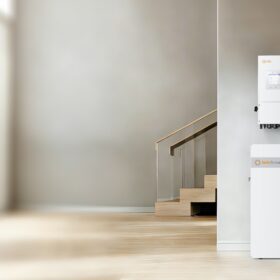
Solis launches new residential storage system portfolio
The Chinese manufacturer said its new three residential battery lines support a depth of discharge of 90% and deliver over 6,000 cycles.
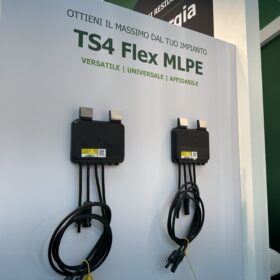
Tigo debuts 725 W optimizer for high-power solar modules
The new product has a maximum wattage of 725 W, a maximum current of 22 A, and a maximum efficiency of 99.6%.

BYD unveils EV batteries that can recharge in 10 minutes
The Chinese electric vehicle maker said the new batteries can charge from 10% to 70% in 5 minutes and from 10% to 97% in 9 minutes. The company also announced a new generation of its Flash Charging Technology.
