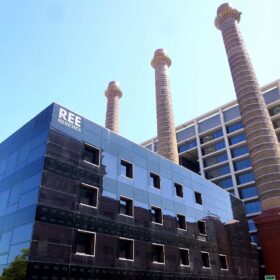
Spain’s grid operator warns of sudden voltage variations in the network
Red Eléctrica de España (REE) says sudden voltage variations in Spain’s grid are tied to renewable generation shifts, but there is no risk of blackout.
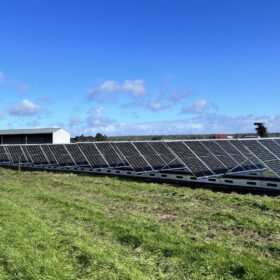
‘Grid in a box’ combines storage and solar PV modules for a microgrid in a 20 ft. container
Paired Power’s modular microgrid targets is assembly-free remote industrial and agricultural applications and rural electrification for Indigenous communities.
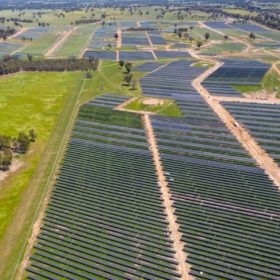
Solar-plus-storage dominates latest Australian CIS tender
Some 11 of the 20 projects allocated in the latest round of the Capacity Investment Scheme (CIS) feature solar sites alongside battery energy storage systems (BESS).
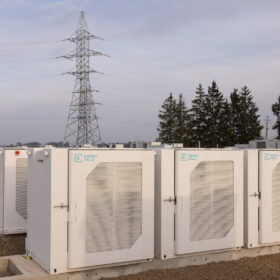
Lithuania responds to overwhelming interest with new €45 million energy storage call
Earlier this year, the Lithuanian Ministry of Energy issued a call for at least 800 MWh of energy storage but ultimately approved support to five times that capacity.

Brazilian law reignites debate on framework for distributed solar, storage
Provisional measure (MP) 1,304 introduces a charge for certain distributed-generation (DG) system operators if an Energy Development Account (CDE) spending cap is breached.

PV-powered sorption system for atmospheric water harvesting
Researchers in China have built an off-grid rapid-cycling sorption-based atmospheric water harvesting system. Powered by three PV modules, the system was tested with four condensation methods indoor and outdoor.

Generac launches microinverter with ‘unlimited backup’ package
The US-based generator company has released its PWRmicro microinverter, which integrates with the company’s energy storage, generator, and energy management system to offer a ‘parallel backup’ solution.
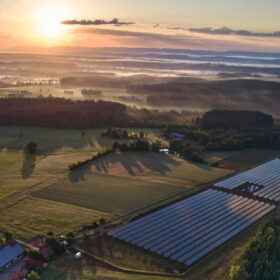
Germany wraps up solar-plus-storage tender with average price of €0.0531/kWh
Germany has concluded a new renewables tender for innovative projects, securing 485 MW of capacity at final prices ranging from €0.0479 ($0.0557)/kWh to €0.0559/kWh
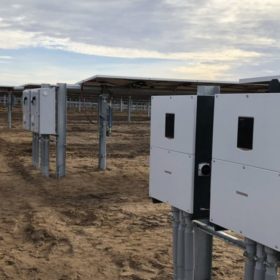
Sungrow initiates Hong Kong listing, targets $126.7 million raise
As part of a dual-listing strategy, the Chinese manufacturer has officially filed its application for an initial public offering on the main board of the Hong Kong Stock Exchange, aiming to fuel its global expansion.

Austria opens final €8 million solar-plus-storage rebate round
Vienna’s third and final subsidy call offers €8 million ($9.2 million) in incentives and a 10% “Made in Europe” bonus for new or expanded solar-plus-storage systems.
