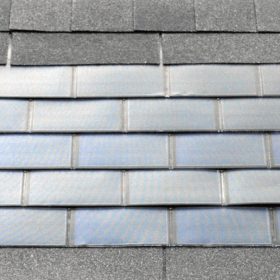
IEA PVPS invites modelers to join first coloured BIPV intercomparison
IEA-PVPS Task 15 has launched its first modeling intercomparison exercise on coloured building-integrated photovoltaics (BIPV) and is inviting PV modelers and researchers to evaluate their methods using real-world performance data.
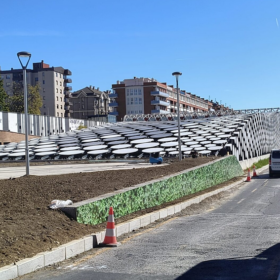
Spanish startup develops BIPV systems for tunnel exits, entrances
Spain-based Izpitek has developed an 86 kW building-integrated photovoltaics (BIPV) installation for tunnel entrances and exits that supplies power for lighting, demonstrating how solar energy can be adapted to complex architectural environments.

Panasonic glass-based perovskite solar panels tested in office windows
The Japanese electronics manufacturer is testing its glass-based perovskite solar PV technology in office windows made by YKK AP, a construction and building materials company.

Historic icons, modern energy: Why heritage buildings need solar roofing
Heritage buildings face mounting pressure to cut carbon emissions, but traditional solar panels often clash with their historic appearance and face public resistance. Building-integrated photovoltaics (BIPV) offer a discreet alternative, blending solar technology into roofing materials and enabling wider adoption across protected sites. As UK policy increasingly supports solar on historic buildings, BIPV presents a scalable solution that reconciles climate action with architectural preservation.
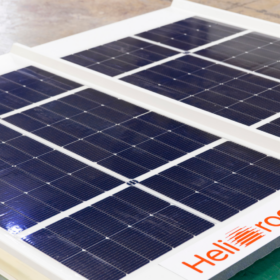
ArcelorMittal starts BIPV module production in France
ArcelorMittal has started producing its Helioroof building-integrated PV modules in France. The steelmaker says the system aims to simplify energy retrofits for commercial and industrial roofs.
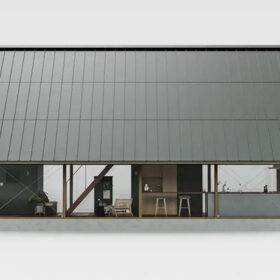
Japanese startup debuts silver-colored BIPV solar module
The new product weighs 13 kg/m2 and is claimed to be particularly suitable for building facades. It features a power ouput of 75 W and a junction box with an IP-68 rating.
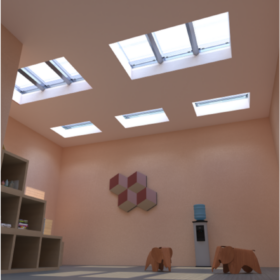
Semi-translucent solar window based on concentrated photovoltaics
Researchers in Spain have designed a PV window that performs active daylighting management while producing electricity. The system can reportedly ensure high power density, as it harvests all the direct light incident on the aperture area.
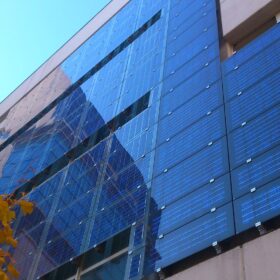
Technical guidebook for building-integrated photovoltaics
As the global transition toward sustainable energy intensifies, building-integrated photovoltaics (BIPV) has emerged as a critical innovation in merging renewable energy with architectural design. The recently published guidebook “Building-Integrated Photovoltaics: A Technical Guidebook,” edited by IEA PVPS Task 15 experts Nuria Martín Chivelet, Costa Kapsis, and Francesco Frontini, offers a comprehensive resource for architects, engineers, and urban planners looking to integrate BIPV into the built environment. This article explores the book’s key insights, including applications, challenges, and future pathways.

Polyshine Solar unveils ultralight, flexible rooftop solar panels
The Chinese manufacturer said its new flexible modules have an efficiency of up to 20.1% and a weight of only 7.5 kg, or 2.92 kg/m2. The new products have purportedly a light transmittance of over 91% and “ultra-high” UV blocking ability.
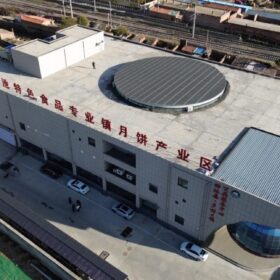
Microquanta developing perovskite solar modules for BIPV applications
The Chinese perovskite solar cell and module maker said its custom-designed double-glass perovskite modules measure 1,200 mm x 1,000 mm and achieve a light transmittance of around 40%.
