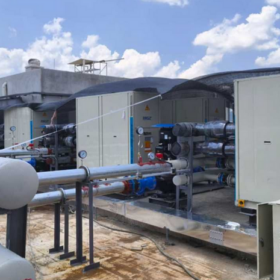
PVT-driven tower heat pump for building retrofits
Researchers in China demonstrated that integrating energy tower heat pumps with evaporator-side boilers, air-source heat pumps, or solar-assisted systems can significantly improve winter heating efficiency and economic performance in commercial buildings. Among the four configurations tested, the evaporator-side boiler and solar-assisted systems delivered the highest performance and energy savings, offering a sustainable, low-carbon alternative to conventional heating.
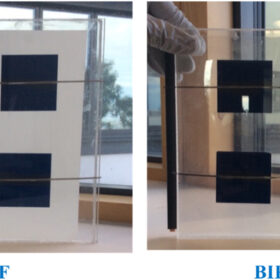
New solar window concept integrates polymer-dispersed liquid crystal to enable switchable transparency
Researchers in the United Kingdom have developed a smart window that combines switchable polymer-dispersed liquid crystal with integrated PV cells, offering controllable transparency and electricity generation. The system balances light, heat, and solar protection while maintaining high visual quality and stable performance, according to its creators.
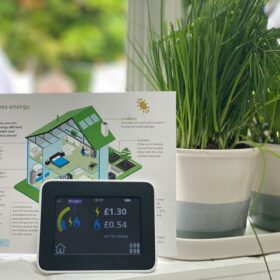
Stricter rules for energy retailers as UK smart meter deployment slows
UK government plans new obligations for energy suppliers as smart meter deployment slows in Great Britain. Annual additions to smart electricity meter total have fallen each year since 2021. Binding annual milestones expected to come into force from 2027.

Ghana plans to procure 200 MW of battery storage
Ghana’s Minister for Energy and Green Transition says the country will advertise competitive bidding processes to deploy 200 MW of battery storage across the country. Ghana’s current installed battery capacity stands at 10 MWh.
German startup offers team of 22 specialized AI workers for PV plant O&M operations
Invertix has launched 22 specialized AI “workers” to automate O&M tasks for renewable energy assets, targeting inefficiencies in data handling, alarm management, and reporting. The startup says its system enables PV plant operators to scale portfolios more efficiently by reducing manual workloads, while keeping humans in the loop for critical decisions.
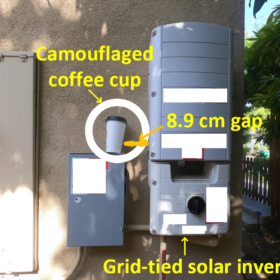
When tiny magnets attack PV systems
In an interview with pv magazine, cybersecurity expert Mohammad Al Faruque explains how seemingly simple sensors in PV systems and other energy systems are surprisingly vulnerable to magnetic, electrical, and acoustic perturbations, which can remotely influence control systems without physical access. Protecting these sensors requires both strict physical security and the development of hardened, interference-resistant technology to safeguard critical infrastructure.
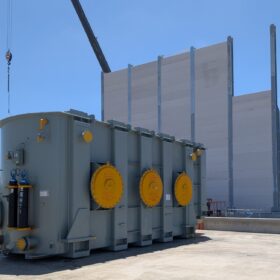
Why BESS insurers are sweating transformers and contractor errors over battery fires
The BESS insurance risk profile is shifting. In an exclusive interview, Tokio Marine GX underwriter Michael Carrington explains why insurers are looking past battery fires and sweating over supply chain bottlenecks, high-voltage transformers, and costly EPC integration errors.

‘The barriers I encountered were never dramatic, they were cumulative’
This week Women in Solar+ Europe gives voice to Delfina Muñoz, Research Director & Strategic Project Manager at France’s CEA. She says diversity is a catalyst for faster, fairer clean energy innovation. Inclusion, mentorship, and authentic leadership don’t just support people, they build stronger, more resilient teams that power the energy transition forward.
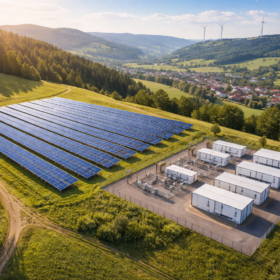
Why technical due diligence is becoming the backbone of Europe’s solar-storage boom
Europe’s hybrid solar-plus-storage projects are growing rapidly, but increasing complexity means treating technical due diligence as a formality is now a serious risk. Rigorous, lifecycle-based technical due diligence (TDD) – covering financial, supply chain, digital, and ESG factors – is essential to ensure project reliability, investor confidence, and a resilient clean-energy transition.
Solar and the cyber winter
In an interview with pv magazine, cybersecurity expert Roberto Setola describes a structural shift in cyber threats against solar energy infrastructure, where attacks now target peripheral systems like remote terminal units rather than centralized SCADA, often in coordinated campaigns amplified by AI. He also emphasized that the recent cyberattack to PV plants in Poland demonstrated how simultaneous strikes on smaller, less-protected operators can potentially trigger major disruptions, including blackouts, economic losses, and cascading grid risks.
