
Solar cyber threats expand, but inverters still stay in the crosshairs
In an interview with pv magazine, Jay Johnson, the CTO of US-based cybersecurity firm DERSec, explains that PV systems face cybersecurity risks that extend far beyond inverters, as demonstrated by a December attack on Polish solar plants where wiper malware targeted substation equipment rather than the inverters themselves. Vulnerabilities often lie in backhaul communication channels like APIs and mobile apps, making layered defenses, network segmentation, and vigilant monitoring essential to safeguard distributed energy resources.
New PV inverter efficiency metric reflects local solar conditions
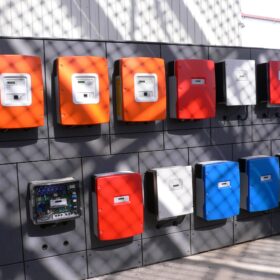
Researchers in Brazil have developed a weighted PV inverter efficiency methodology that accounts for country-specific solar irradiance and operating conditions. The approach is designed to address the limitations of international metrics by incorporating variables such as input voltage and maximum power point tracking (MPPT) performance.
SolarEdge launches Nexis hybrid inverter and high-voltage battery for residential PV
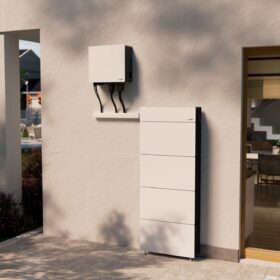
The Nexis solution combines a flexibly configurable hybrid inverter with a modular high-voltage battery offering up to 14 kW charging capacity per stack. The inverter delivers 8–20 kW AC power, supports up to 200% DC oversizing, and features IP65-rated design with integrated backup power.

Sigenergy unveils 166 kW inverter for C&I solar
Sigenergy has launched a 166 kW IP66-rated inverter for C&I solar and storage offering nine MPPT trackers and flexible AC/DC connections. The launch coincided with the opening of its Nantong Smart Energy Center, a 136,000 m² facility for R&D, manufacturing, and global delivery.
Hinen releases residential off-grid inverter
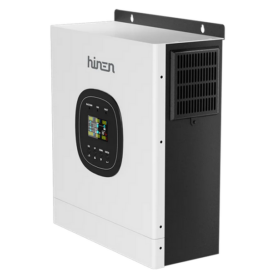
The 3 kW N3300S inverter combines a pure sine wave inverter with an integrated MPPT solar charge controller for small residential and hybrid PV systems. The unit supports multiple power sources, flexible battery chemistries, and rapid grid/off-grid switching.

Chinese PV Industry Brief: Polysilicon prices slide amid low operating rates
The China Nonferrous Metals Industry Association (CNMIA) says polysilicon production has fallen to 32% of capacity, sustaining oversupply, while wafer prices weaken as post–Chinese New Year demand fails to recover.

German startup launches gateway to block inverter kill switches
German startup Solarsecure Tech has introduced a gateway designed to decouple PV inverters from manufacturer clouds and block unauthorized remote control commands.

Fraunhofer IEE calls for ‘grid-forming readiness’ in distribution networks
Germany’s Fraunhofer Institute for Energy Economics and Energy System Technology IEE (Fraunhofer IEE) says in a new position paper that large-scale battery storage systems in medium-voltage grids should be technically prepared for future grid-forming operation, aiming to bridge the gap between current regulations and potential system stability requirements.
How to detect PV system underperformance using only AC-side inverter data
An Australian research team has developed a five-step, rule-based method that detects and classifies underperformance in PV systems using only AC-side inverter data. Validated across more than 1,000 systems, the approach offers a low-cost, low-intervention solution for improving reliability, fault response, and PV system performance.
Enphase releases new control software for its IQ8, IQ9 microinverters
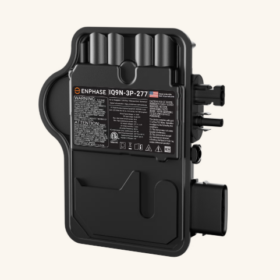
The US company said its Power Control software is designed to help installers reduce costs and streamline interconnection. Among its features is the ability to control aggregate system exports through software-based limits.
