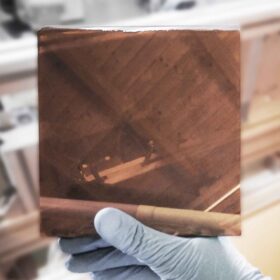
Futurasun acquires solar perovskite startup
Futurasun, an Italian module manufacturer, has acquired Rome-based Solertix. It now aims to bring its perovskite-based solar cell technology closer to commercial production.
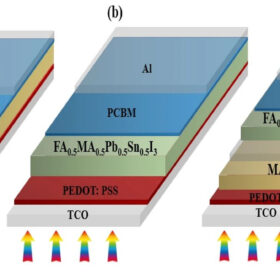
Novel design for inverted all-perovskite bilayer solar cells with 24.83% efficiency
An international research team has crafted an innovative solar cell design. By employing a top absorber consisting of methylammonium lead iodide (MAPbI3), a lead-halide perovskite, and a bottom absorber composed of FA0.5MA0.5Pb0.5Sn0.5I3, a perovskite material, the cell maximizes light absorption across a broad spectrum.
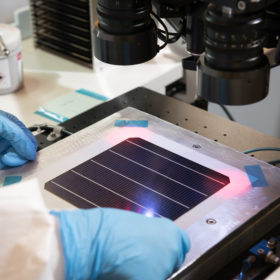
Oxford PV sets 28.6% efficiency record for full-size tandem cell
Oxford PV, a leading perovskite solar pv company with operations in England and Germany, achieved power conversion efficiency of 28.6% for a two-terminal perovskite-silicon tandem cell measuring 258.15 cm² cell: A world record for a device based on a ‘full size’ silicon wafer. The record was certified by Fraunhofer Institute for Solar Energy Systems (Fraunhofer ISE).
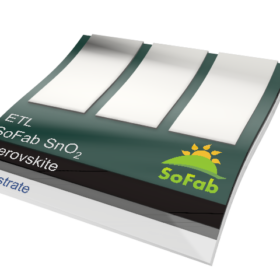
US startup develops flexible inverted perovskite solar cell with 16.1% efficiency
Scientists from the US National Renewable Energy Laboratory (NREL) and the University of Louisville have developed a revolutionary solar cell using yttrium-doped tin oxide nanoparticles. The innovation improves charge extraction and overall cell performance.
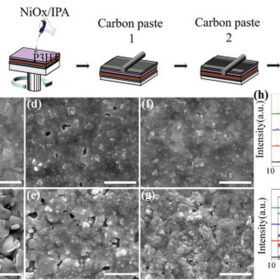
Carbon electrode perovskite solar cell with 20.8% efficiency
Researchers in China have built one of the most efficient carbon electrode perovskite solar cells ever reported to date. The device uses an organic/inorganic planar hole transport layer structure that purportedly has superior electrical contact.
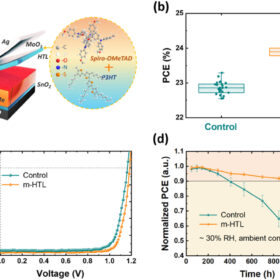
Perovskite solar cell achieves 24.3% efficiency, high stability via binary mixed hole transport layer
Researchers in China have built a hole transport layer with a mixed binary configuration integrating the polymer Regioregular poly(3-hexylthiophene) (P3HT) and Spiro-OMeTAD. They used it to build a perovskite solar cell that was able to retain 90% of its initial efficiency after 1,200 hours of storage in dark ambient environment.

Weekend Read: New turf for thin films
Thin-film technologies have long promised to make a major impact on the solar industry but have largely been constrained to niche applications and research labs if they were not shredded by the market. After several false starts, current trade dynamics and promising research programs may help solar thin films find their place in the sun.
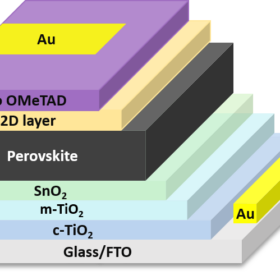
3D/2D perovskite solar cell treated with substituted PEAI hits 23.08% efficiency
An international research team has fabricated a quasi-2D perovskite solar cell with a special kind of phenethylammonium iodide (PEAI) salt to enhance hole extraction. The result is a 23.08%-efficient device that is also able to retain 95% of its initial efficiency after 900 hours.
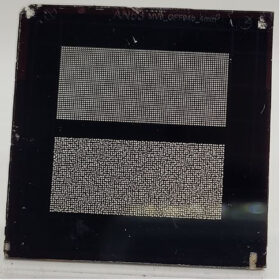
Translucent tandem perovskite-perovskite solar cells for BIPV
An international research group has made translucent perovskite solar cells to maintain decent levels of average visible transmittance (AVT) while offering higher efficiency. They tested different module and cell configurations and produced a two-terminal, perovskite-perovskite tandem device with an efficiency of 17.7% at 12% AVT.
‘Natural clay’ additive promises gains in perovskite solar cell efficiency, stability
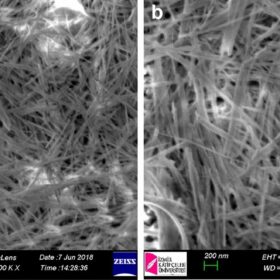
Scientists in Turkey have demonstrated that sepiolite, a naturally occurring clay substance, can be added to perovskite precursor materials, and form a scaffold layer that can improve the efficiency and stability of the cells. The scientists believe that this substance could be valuable in developing reproducible processes for the production of large-area perovskite solar cells.
