
Antimony emerges as strong candidate dopant for Czochralski PV wafers
Researchers from Australian National University and Longi used photoluminescence imaging to analyze dopant distributions in RCz-grown silicon wafers doped with antimony, phosphorus, and gallium, finding highly uniform radial concentration profiles suitable for high-efficiency solar cells. The study also found that antimony-doped wafers provide more stable axial doping along the ingot, highlighting their potential for next-generation photovoltaic manufacturing.

EU auditors warn energy community targets outpace reality
The European Court of Auditors says in a new report that EU policies supporting energy communities are progressing slowly and that the bloc’s goal of establishing one renewable energy community in every municipality with more than 10,000 residents by 2025 is unlikely to be met.
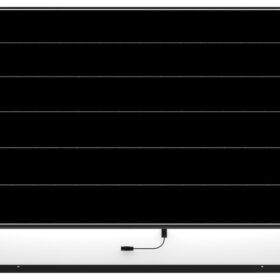
Aiko launches 545 W back-contact solar module with 25% efficiency
The Chinese manufacturer said its new back-contact module delivers up to 545 W and over 25% efficiency in a compact rooftop format for residential, C&I, and off-grid applications.

Sliding shutters integrate PV for building facades
German manufacturer Ehret has launched SolarSlide, a sliding shutter with integrated PV modules developed with the Fraunhofer Institute for Solar Energy Systems (Fraunhofer ISE). It provides solar shading while generating electricity for residential and commercial facades.
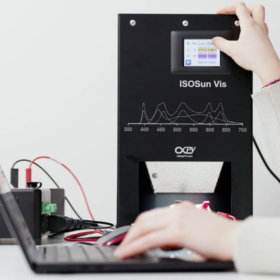
InfinityPV releases new compact solar simulator
The Danish company says its new product is ideal for small to medium-sized solar cell testing. It can simulate light conditions in the 390–700 nm range.

Morocco begins construction on 305 MW Noor Atlas solar program
Morocco’s state energy agency and national utility have signed power purchase agreements (PPAs) and begun construction on six Noor Atlas solar plants totaling 305 MW. The project – financed by KfW, the European Investment Bank and Bank of Africa – aims to expand renewables, support local industry and create regional jobs.

Africa’s next growth frontier: Why agrivoltaics are worth the long-term bet
Africa has abundant sunlight, arable land, and innovative farmers, and agrivoltaics offers a long-term strategy to boost food security, climate resilience, and energy access simultaneously. Success depends on coordinated policy, inclusive community engagement, and patient, innovative finance to build a viable, scalable market.
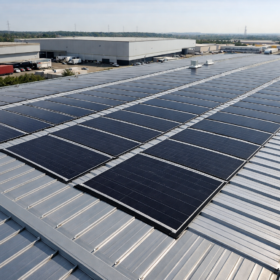
Lightweight PV modules could unlock more than 85 GW of untapped rooftop potential in Europe
In its second monthly column for pv magazine, the Becquerel Institute explains that Europe has vast commercial and industrial rooftops suitable for solar, but decades-old structural limits block conventional PV panels, creating an 85 GW untapped potential. Lightweight PV modules, commercially available and up to 50% lighter, can unlock this constrained market, meeting regulatory, economic, and technical needs for solar deployment across the continent.
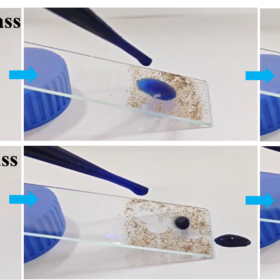
Transparent superhydrophobic self-cleaning coating increases solar cell efficiency by 4.75%
Researchers have developed a PFAS-free dual-layer sol-gel and hydrophobic silica coating that repels water, dust, and dirt while maintaining high light transmission for solar panels. The transparent, self-cleaning coating improved photovoltaic efficiency from 13.90% to 14.56%, demonstrating strong durability and potential for future commercial applications.
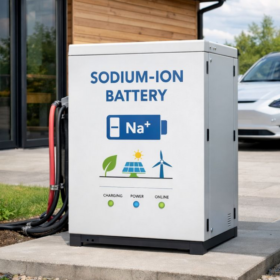
NanoMalaysia unveils sodium-ion prototype surpassing 300 Wh/kg
The new prototype ranks among the most advanced sodium‑ion battery systems reported worldwide.
