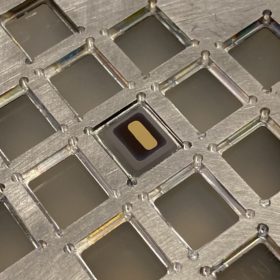
Chinese scientists push selenium solar cells beyond 10% efficiency
Researchers at the Chinese Academy of Sciences have set a world record for selenium solar cells, achieving 10.3% efficiency for the first time above the 10% threshold. The breakthrough was enabled by optimized charge-selective contacts, light-driven crystallization, and post-deposition annealing, producing stable devices with a 1.03 V open-circuit voltage.

Luxembourg revamps subsidies for solar on residential buildings
Luxembourg’s new subsidy scheme for solar installed on residential buildings by an approved installer deducts the financial aid from the installer’s invoice, meaning customers no longer have to wait for reimbursement.
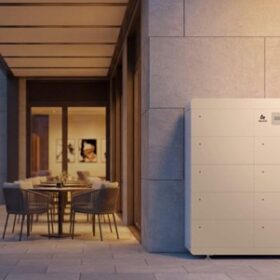
AlphaESS launches modular energy storage system for small C&I users
Designed for power ratings of 29.9 kW and 50 kW with scalable capacity up to 216,9 kWh, the new system is aimed at businesses seeking flexible energy storage solutions without the complexity of installation
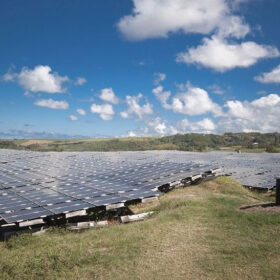
France awards 40 MW of solar projects in non-interconnected zones
France’s fourth PV tender for non-interconnected areas allocated 40 MW across Corsica, Réunion, and French Guiana. The weighted average tariff fell to €92.04 ($107.59)/MWh, while overall subscription remained well below the 99 MW available.
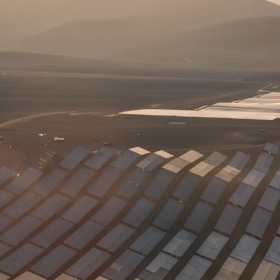
Pacific Hydro commissions 293 MW of PV with 110 MW/220 MWh of storage in Chile
Pacific Hydro has brought its 293 MW Desierto de Atacama solar project online with 110 MW/220 MWh of battery storage. The Atacama Desert facility is expected to supply 780 GWh of clean electricity annually to more than 310,000 homes.

Croatia deploys 417 MW of solar in 2025
Croatia’s solar capacity is on course to exceed its wind energy capacity for the first time in early 2026. With utility-scale projects facing regulatory deadlock and the end of net-metering for the residential market, growth is being led by commercial and industrial customers.
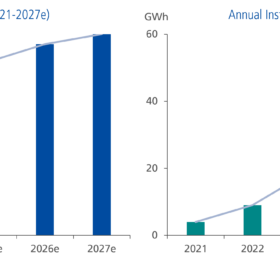
Global solar enters period of adjustment, as market conditions redefine rules of competition
Global solar growth is flattening in major markets as oversupply from China and India drives prices down and shifts competition from sheer volume to execution, policy alignment, and system integration. Across the U.S., Europe, and China, energy storage is becoming essential for project viability, making PV-plus-storage and strong EPC partnerships the new basis for winning projects in 2026 and beyond.
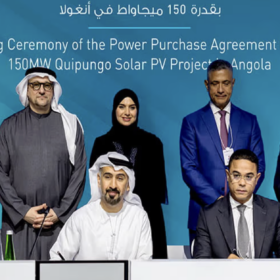
Masdar bags PPA for 150 MW of solar in Angola
Abu Dhabi-based developer Masdar has signed its first power purchase agreement in Angola, covering a 150 MW solar site that marks the first phase of a 500 MW multi-site project.
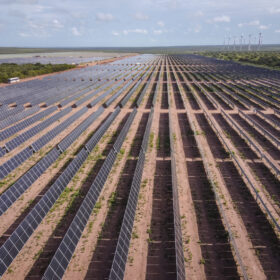
Capex-driven strategies can reduce solar LCOE by 20%
An international research group has conducted a literature review of capital expenditure-driven levelized cost of electricity optimization strategies for utility-scale PV systems. Tracking optimization, system voltage escalation, and advanced system design are identified as the most promising cost reduction areas. “The next wave of PV research must be LCOE-native, system-level, and deployment-validated,” a member of the research group said.
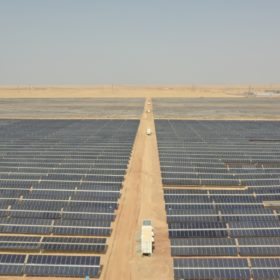
Scatec secures PPA for Africa’s largest solar-plus-storage project
Scatec has inked a 25-year power purchase agreement in Egypt for a 1.95 GW solar, 3.9 GWh battery energy storage project, representing the developer’s largest investment to date.
