
Clementy Group terminates €95 million proposal to invest in Fimer
Clementy Group – a UK-based investment firm – has decided to scrap its plans to invest €95 million ($104.5 million) in Fimer, as the Italian inverter maker’s shareholders have reportedly failed to issue shares that were needed for the investment. Fimer originally filed for creditor protection in February 2022.
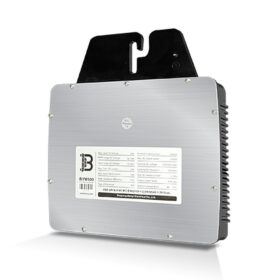
Beny Electric presents 600 W microinverter for balcony solar modules
Beny Electric’s new 600 W microinverters are designed for balcony solar modules, with a 96.5% efficiency rating and a European efficiency of 96%. They are available in three versions, with outputs of 500 W, 550 W, and 600 W.
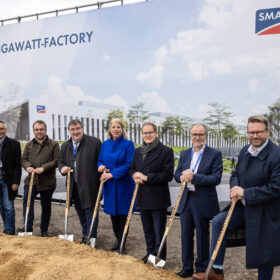
SMA Solar begins work on 20 GW inverter factory in Germany
SMA says its total inverter capacity will double to 40 GW once its new factory is fully operational in Niestetal, Germany.
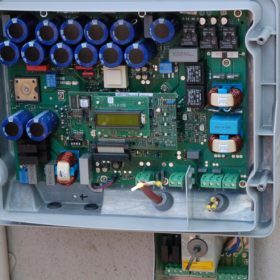
UL Solutions, NREL set cybersecurity standards for distributed energy, inverters
UL 2941 provides testable requirements for energy storage and generation technologies on the distribution grid. The new cybersecurity protocol provides a framework for PV inverters, electric-vehicle chargers, wind turbines, fuel cells, and other distributed resources.
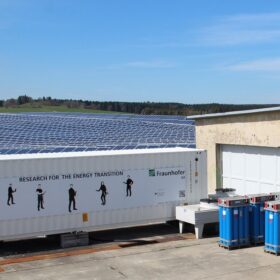
Investigating load scenarios for grid-forming inverters
A consortium led by the Fraunhofer Institute for Solar Energy Systems (ISE) will test grid-forming inverters at a large-scale PV facility in southern Germany. The aim of the first tests is to examine the performance of the devices under real operating conditions, stress factors, and typical stress profiles.
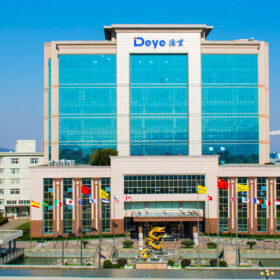
Deye to build two new inverter factories totaling 18 GW
The Chinese inverter maker plans to build both new factories in China’s Zhejiang province.
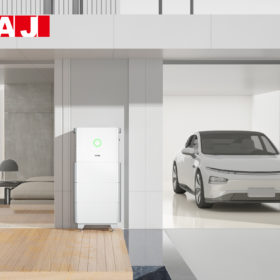
SAJ unveils new line of residential battery inverters
China’s Guangzhou Sanjing Electric (SAJ) has developed a new line of battery inverters in single-phase and three-phase configurations.
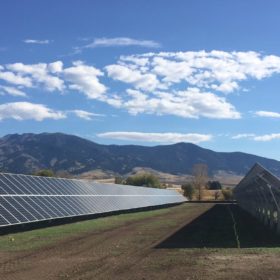
Inverter sizing guides grid connection, rules US court
The US Court of Appeals has ruled that an 80 MW (AC)/160 MW (DC) solar farm, with 50 MW of battery storage, meets “Qualifying Facility” status of 80 MW (AC) or less under the Public Utility Regulatory Policies Act (PURPA) of 1978.
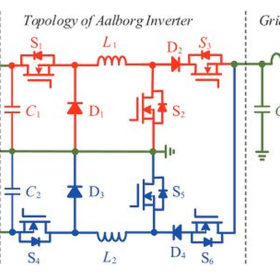
New Aalborg inverter design for PV applications
An international research group has developed a new Aalborg inverter design for high-power applications in solar arrays. The device has fewer switches than conventional, voltage-source inverters and can reportedly improve PV system performance by reducing switching losses.

SolarEdge announces record revenues in 2022
SolarEdge’s revenue rose 58% year over year to $3.1 billion in 2022. It expects revenues for the first quarter of 2023 to be within the range of $915 million to $945 million.
