The PV world 10 years ago – Summer Series Part V
pv magazine editor Pilar Sánchez Molina takes a look at PV sector news from 10 years ago as part of an ongoing series. These insights bring back memories of an exciting, challenging period, while pointing to where we might be in 2030.
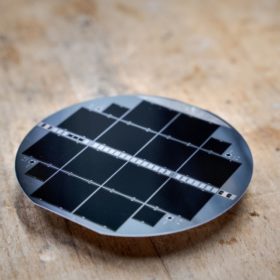
Fraunhofer ISE claims 25.9% efficiency for III-V tandem solar cell
The new results mark an improvement on the institute’s previous 24.3% efficiency record. The III-V tandem solar cell is directly grown on silicon.

Facebook announces nearly 1 GW of new energy deals
As Facebook races to meet its goal of becoming 100% powered by renewables by the end of this year, it has made another massive investment in clean energy by signing contracts for 806 MW of new solar and wind capacity, with projects in Ireland and the US states of Utah, Ohio, Illinois, and Tennessee.

Poland’s PV capacity reaches 2.26 GW
The country has deployed around 916 MW of new PV capacity in the first seven months of the year.
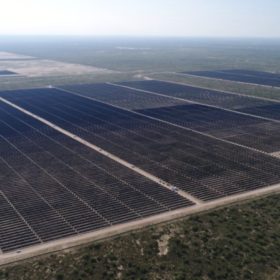
Texas approves 12 GW of solar projects in seven months
The Texas grid operator has more than tripled its pace of completing utility-scale solar interconnection studies since 2019. Yet the battery backlog continues to grow.
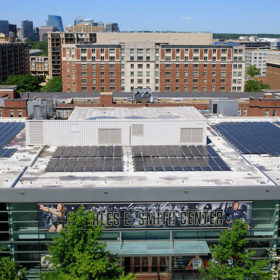
Innovative community solar in the United States
A 497 kW project on five roofs at George Washington University in Washington, D.C., uses SREC sales to provide $1.50 in community benefits for every dollar of power generated. Call it community solar-plus.
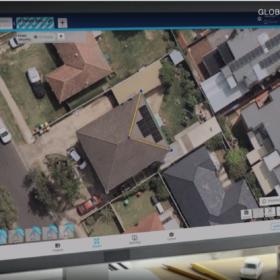
Digital prospecting and selling tools for rooftop PV
An Australian-developed aerial mapping technology is being deployed to speed PV uptake.
India’s NTPC 1.2 GW solar auction sees aggressive tariff of INR 2.43/kWh
Low tariff trends can be attributed to developers’ desperate attempt to take advantage of the current situation wherein only a safeguard duty of 14.9% is applicable, according to JMK Research.
The PV world 10 years ago – Summer Series Part IV
pv magazine editor Pilar Sánchez Molina takes a look at PV sector news from 10 years ago as part of an ongoing series. These insights bring back memories of an exciting, challenging period, while pointing to where we might be in 2030.
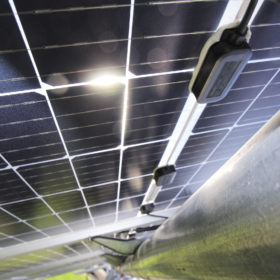
New method to calculate solar irradiation on rear side of bifacial panels
Researchers have announced a new technique that is a modified version of the isotropic diffuse model.
