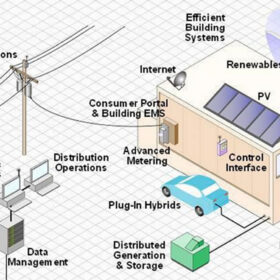
Industry 4.0 technologies raise cyber risks for smart renewables grids
An international research team developed a multi-stage intrusion detection system that uses supervised and unsupervised AI techniques to detect and mitigate cyber threats in smart renewable energy grids. The system can reportedly achieve high accuracy, low false positives, and real-time detection, outperforming traditional intrusion detection system models.
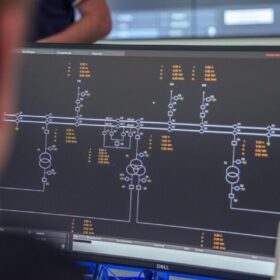
Germany classifies cybersecurity threats for energy infrastructure
Germany’s Federal Network Agency will use a new, structured framework developed by Fraunhofer IOSB-AST to classify cybersecurity incidents in the energy sector. The methodology enables comprehensive risk assessments, from initial reports to systemic and economic impacts, supporting consistent evaluation across the entire energy value chain.

Austria deploys 1.63 GW of solar in 2025
Austria’s photovoltaic market slowed in 2025, with around 1,634 MW of new capacity installed, bringing the country’s total PV capacity to approximately 9.9 GW.
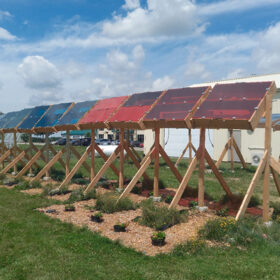
Agrivoltaics for turnips
Researchers in Canada found that semi-transparent cadmium telluride and low-transparency crystalline silicon solar panels can boost turnip root and leaf yields in agrivoltaic systems by optimizing light quality, distribution, and heat stress. Their study highlights that PV module type, transparency, and spectral transmission must be carefully matched to plant physiology to maximize both crop productivity and renewable energy generation.
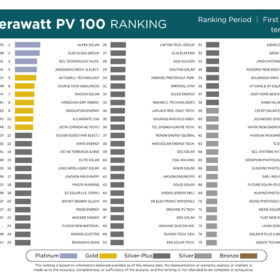
Who are the Top 100 PV manufacturers today?
The Terawatt PV 100 ranks the top 100 solar manufacturing companies using a new methodology based on production scale, financial strength, and corporate transparency, with Tongwei leading the Q1 2026 list and most top firms headquartered in China. The analysis highlights increasing global supply-chain scrutiny driven by tariffs and ESG mandates, while also showing rising influence from Indian companies and strong positions for key materials and equipment suppliers.
Spain enables 50-plus renewable plants for real-time voltage control
Spain’s grid operator Red Eléctrica and regulator CNMC have launched real-time voltage control services, allowing renewable energy installations to provide dynamic grid support under a new regulatory framework.

Solar cyber threats expand, but inverters still stay in the crosshairs
In an interview with pv magazine, Jay Johnson, the CTO of US-based cybersecurity firm DERSec, explains that PV systems face cybersecurity risks that extend far beyond inverters, as demonstrated by a December attack on Polish solar plants where wiper malware targeted substation equipment rather than the inverters themselves. Vulnerabilities often lie in backhaul communication channels like APIs and mobile apps, making layered defenses, network segmentation, and vigilant monitoring essential to safeguard distributed energy resources.

German startup offers team of 22 specialized AI workers for PV plant O&M operations
Invertix has launched 22 specialized AI “workers” to automate O&M tasks for renewable energy assets, targeting inefficiencies in data handling, alarm management, and reporting. The startup says its system enables PV plant operators to scale portfolios more efficiently by reducing manual workloads, while keeping humans in the loop for critical decisions.
When tiny magnets attack PV systems
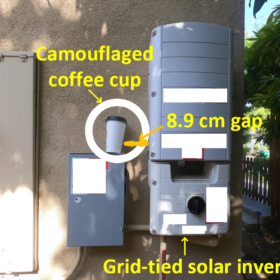
In an interview with pv magazine, cybersecurity expert Mohammad Al Faruque explains how seemingly simple sensors in PV systems and other energy systems are surprisingly vulnerable to magnetic, electrical, and acoustic perturbations, which can remotely influence control systems without physical access. Protecting these sensors requires both strict physical security and the development of hardened, interference-resistant technology to safeguard critical infrastructure.
Fraunhofer CSP warns some cleaning agents may reduce PV module performance by up to 5.6%
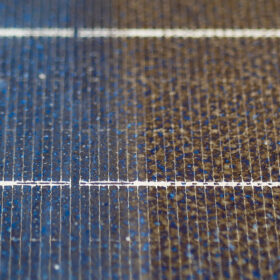
Researchers at the German institute found that some widely used PV cleaning agents can damage anti reflective glass coatings, significantly reducing solar module efficiency. Their tests showed that while some cleaners are safe, others cause visible and permanent coating degradation, highlighting the need for careful selection of cleaning products to avoid long term performance loss.
