
Cooling PV modules with hydrogel-coated paper
A Vietnamese research team has developed a low-cost passive cooling system for PV modules based on hydrogel-coated paper that combines water flow and interfacial evaporation to reduce operating temperatures. Outdoor tests showed temperature reductions of up to 14 C and efficiency gains of up to 16.8%, with stable operation achieved using both freshwater and natural seawater.

Longi announces world record efficiency of 28.13% for silicon solar cell
Longi claims to have achieved the world’s highest efficiency for a silicon solar cell. The result was confirmed by Germany’s Institute for Solar Energy Research Hamelin (ISFH).

Trina Solar claims world’s highest efficiency for silicon solar cells with 28.0%-efficient device
The Chinese manufacturer said its TOPCon-compatible hybrid back-contact solar cell achieved a power conversion efficiency of 28.0%. The result was confirmed by Germany’s Institute for Solar Energy Research Hamelin (ISFH).
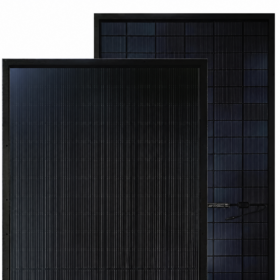
Premier Energies unveils 600-630 W all-black TOPCon solar modules
The Indian manufacturer said its new all-black panel series features a power conversion efficiency of up to 23.32% and a bifaciality factor of up to 85%.

Oxford PV says tandem solar could add up to 5 km to daily EV range
Oxford PV has joined Nissan’s SUITE consortium, advancing perovskite-silicon tandem solar tech that could boost vehicle-integrated solar EV range by an additional 3–5 km per day and push total daily solar driving range toward 15–20 km.

Chinese scientists build silver-free heterojunction solar cell with 25.2% efficiency
The research team developed a plasma interface engineering method to improve indium tin oxide layers, solving adhesion, contact resistance, and stability issues for copper electroplating. The optimized process enabled uniform copper metallization and boosted device efficiency to 25.2%, significantly outperforming untreated reference cells.

Two-year testing shows how PV plants increase local temperatures in semi-arid regions
A two-year field study in a 100 MW photovoltaic plant in semi-arid Inner Mongolia combined ground-based sensors, radiation measurements, and UAV thermal imaging to quantify how large-scale PV installations alter local air temperature, surface temperature, and energy balance compared with nearby non-PV areas. Results show consistent site-scale warming of 0.8 C.

New Zealand’s grid operator finds emerging energy gap in early 2030s
Transpower’s latest assessment of New Zealand’s balance between electricity supply and demand suggests an energy gap could emerge in the early 2030s, even if all committed and likely investments are delivered without delay.

Chinese solar exports surge 125% in March on policy change rush, not underlying demand acceleration
The Chinese customs data show a March surge as buyers rushed shipments ahead of April’s tax-rebate change.

U.S. government sets preliminary anti-dumping duties on solar imports from India, Indonesia, and Laos
The U.S. Department of Commerce has issued preliminary anti-dumping determinations for three key solar-exporting nations, establishing duties of up to 123% on crystalline silicon photovoltaic cells and modules.
